How to Find and Read TikTok Ad Examples
This guide starts with TikTok’s Ads Library and shows you how to find ads in your niche and research 10 TikTok ad examples that you can study.


Finding TikTok ad examples is easy. Figuring out what you can learn from them takes a closer look. A creator’s casual delivery, a clear product benefit, or a repeated brand message might give you an idea to test—but an ad being live doesn’t tell you how well it performs.
This guide covers how to find TikTok ads, read the available details, and decide which creative ideas deserve your attention. We’ll look at 10 real examples and highlight something specific to study in each. Then, you’ll learn a practical four-part structure for planning your own ad, plus a way to turn existing clothing photos into video variations you can test.
Key Takeaways
Start with the source: The Ads Library shows live ads by keyword, so you can study what's actually running.
Longevity is the signal: A long-running ad is worth studying because the advertiser has continued to run it.
Ten real examples: From Duolingo's single-message feature ad to Underdog Coffee's repeated brand line.
Build in four beats: Grab → set up → prove → ask. It's a useful starting structure for product-focused TikTok ads.
How to Find and Interprete TikTok Ad Examples
Start with the library, not a listicle
TikTok's Ads Library is public ad research source. You can search for any brand, product, or category. It shows the current ads and information that helps you see when they were first and last shown. Most "best TikTok ads" roundups recycle the same five campaigns from years ago.
How to read an ad in five minutes
Start with ads that are running, then look for ideas worth testing.
Search your category, not the brand. Use product-type terms — "shapewear," "protein powder," "meal kit."
Check how long each ad has been running. A long-running ad is worth studying because the advertiser has kept it active. But treat its longevity as a clue, not proof that the ad is a top performer.
Watch the opening first. Ask what makes you stop, or why nothing did.
Reduce it to one message. If you can't sum up an ad in a sentence, it probably wasn't working.
Look past production quality. A polished video isn't automatically a stronger ad. Ask whether the idea, product demonstration, and message are clear.
💡 Pro tip: Keep a folder of screenshots and links to the long-running ads in your niche. Ten minutes of collecting beats an hour of scrolling.
10 TikTok Ad Examples
All ten were live in the Ads Library in late September 2026. Each one shows a different choice — read them as a menu, not a ranking.
Gymshark (Apparel)
Several ads in the library use creator-style creativity rather than polished brand-film production.
What to study: how a product can be presented through a creator's normal content style.
Chipotle (Food)
Similar pattern, even more casual — the live ads come from regular-looking accounts with captions like "i lov chipotle."
What to study: The creative feels closer to an ordinary TikTok post than a traditional polished food commercial.
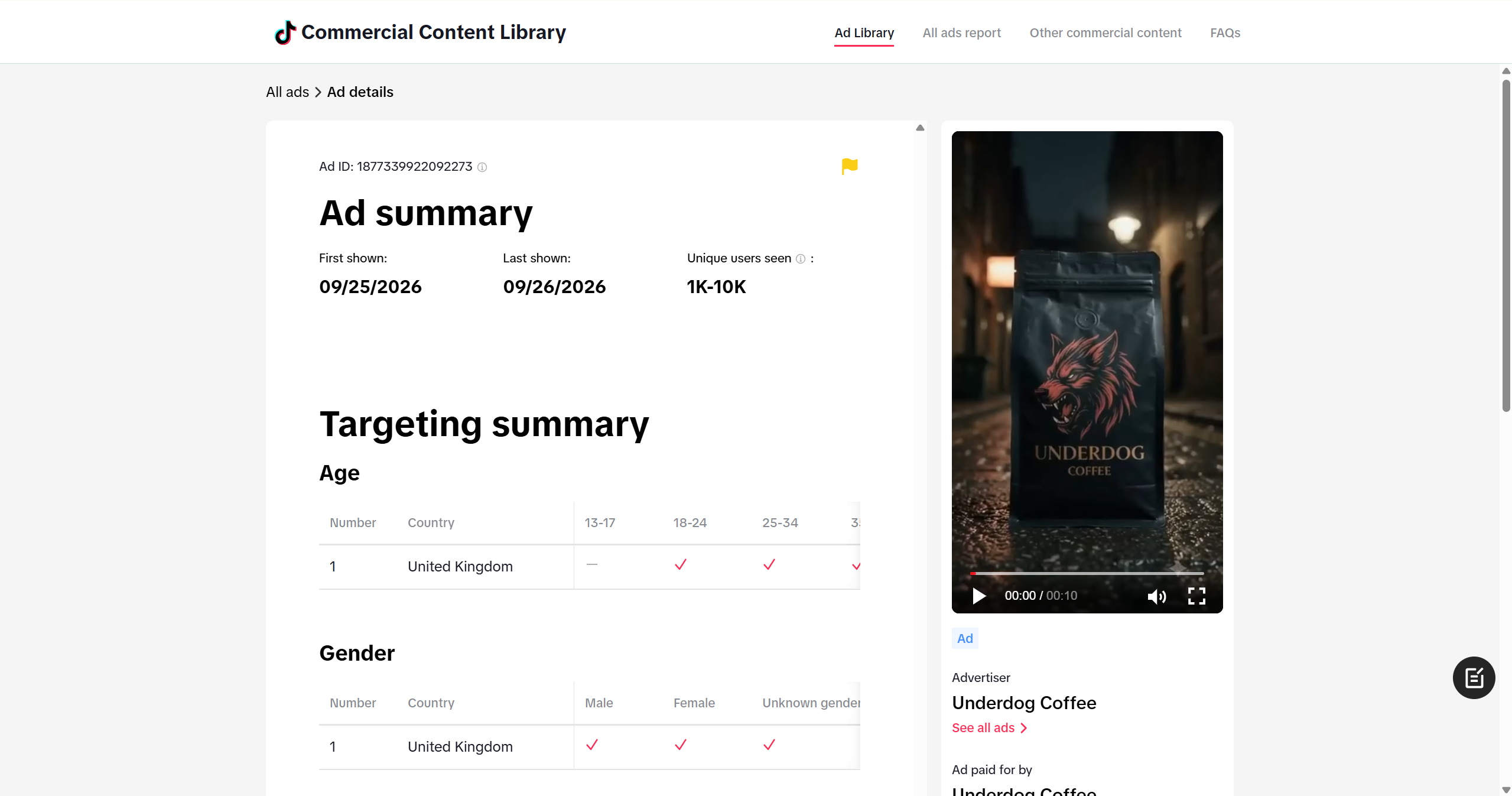
Underdog Coffee (Food)
The same motivational line — "Rain doesn't stop the grind. Neither do you. Strong coffee. No excuses." — rerun across several ads.
What to study: Repeating a recognizable brand line across creative variations can make the campaign message more consistent.
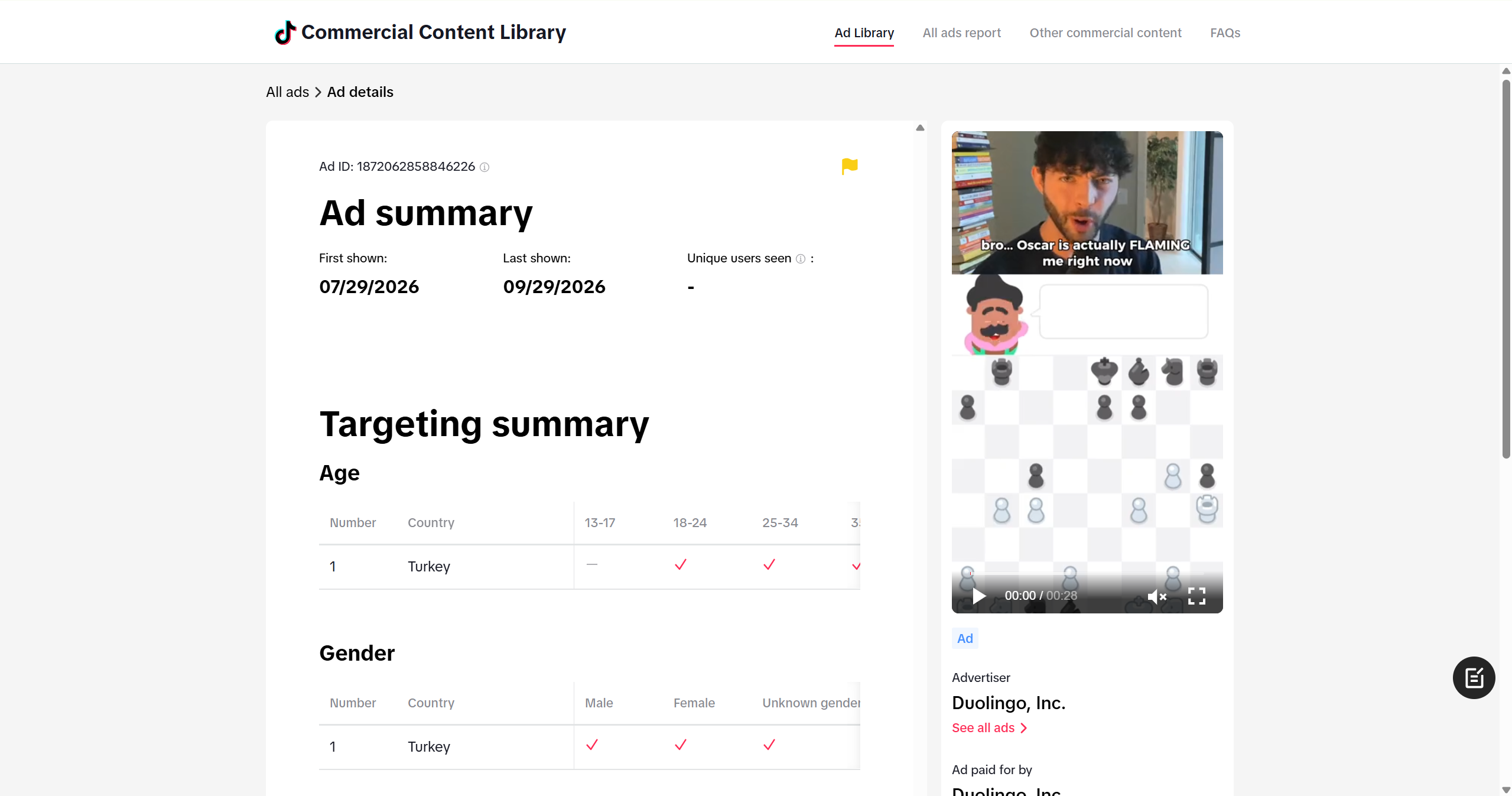
Duolingo (Apps)
The opposite approach, done well: a single clean message — "New on Duolingo: Chess" — across many variations, running for about two months.
What to study: Keep the message simple when the product announcement itself is the story. Multiple creative variations can reinforce the same core message.
YUMMU Skincare (Beauty)
One advertiser, one message — "Skincare coreean autentic" (authentic Korean skincare) — localized into Romanian and repeated across fresh creative.
What to study: Adapt the message to the language and market instead of simply reusing the same creativity everywhere.
Orgain (Health)
An organic protein powder ad running from a Spanish-language creator handle.
What to study: The ad uses a Spanish-language creator context to speak to a specific audience segment.
Chia Food York (Health)
A benefit-first headline: "Boost your protein intake with our delicious 50% Protein Peanut Butter Powder."
What to study: Lead with a concrete product benefit before giving the product name or details.
Rocka (Health)
An offer-led hook — "Claim the coupon and pay less" — pinned to a protein shake.
Borrow: when price is the draw, say it early.
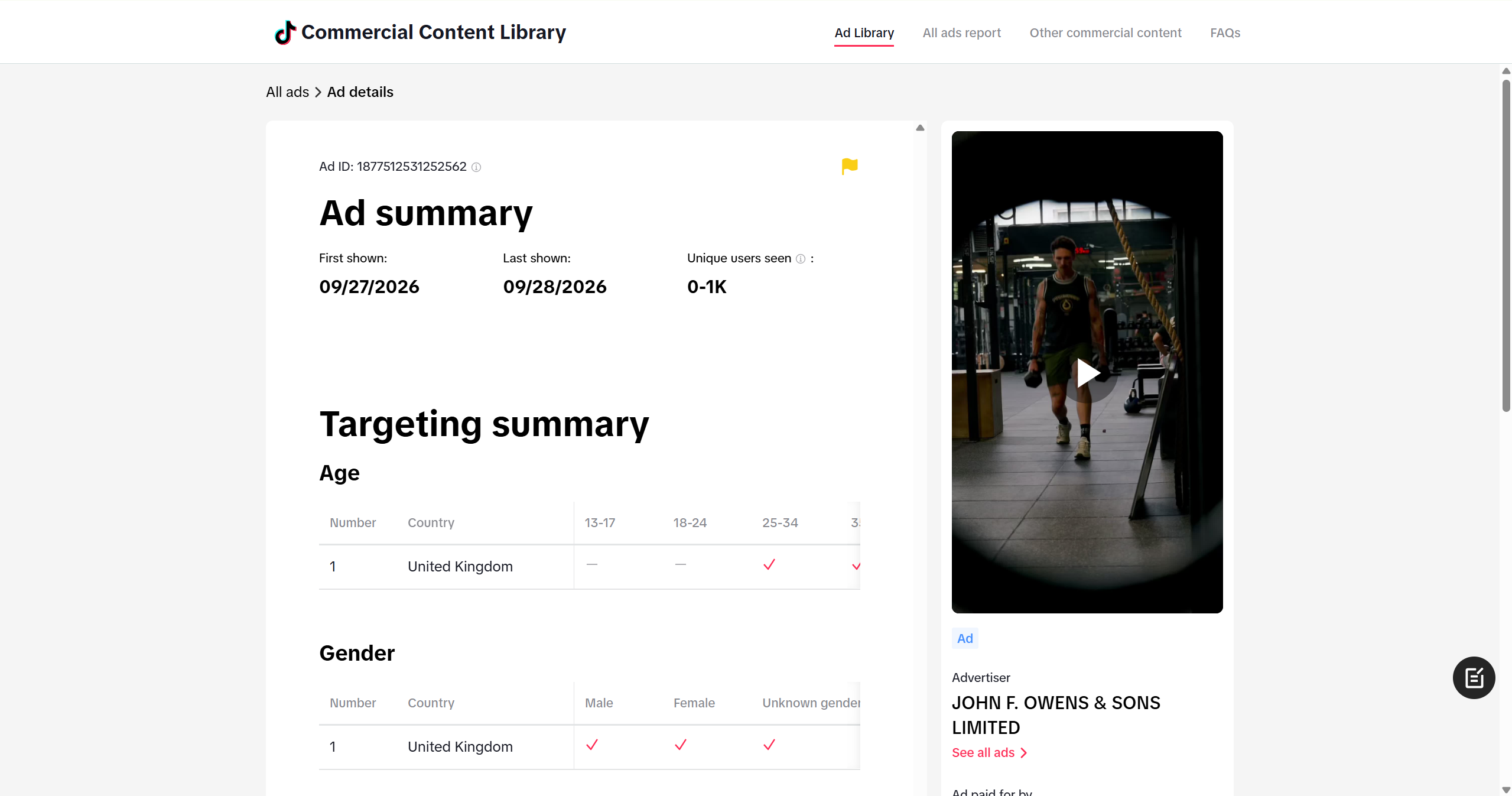
John F. Owens & Sons (Food)
An ingredient-transparency angle: "What's in our Protein Overnight Oats?" followed by the list.
Borrow: curiosity about what's inside works for food and supplements.
Generic footwear advertiser (Apparel)
A straightforward product-title creative focuses on exactly what the product is: “Breathable Running Shoes for Men.”
What to study: Clear product naming can be a valid creative angle when the product itself matches a specific search or shopping intent.
Across these examples, two patterns show up repeatedly: creator-style creative that fits the feed, and simple product messages that stay consistent across variations. These are useful patterns to test, not rules that every successful ad follows.
How to Create Good TikTok Ads
Once you've read enough examples, the pattern is obvious. If you’re not sure how to structure your next product ad, these four beats are a useful starting point.
Hook. Give viewers a reason to stop.
Context. Make clear what the product is and why it matters.
Proof. Show the product, result, demonstration, or reason to believe.
CTA. Give viewers one clear next step.
The timing can vary by creativity. Don't force every ad into the same length or beat structure.
For standard in-feed creative, vertical 9:16 is the recommended format. TikTok also supports other aspect ratios depending on the ad setup.
Should You Chase Trends?
TikTok trends move fast — any fixed "top 10" list is stale within a week. That's why you check the source instead of a blog post.
TikTok's own Creative Center ranks what's rising right now. It can help you find current hashtag and video trends by industry and time period. Use it for inspiration, but don't assume a trend will still be relevant when your ad goes live.
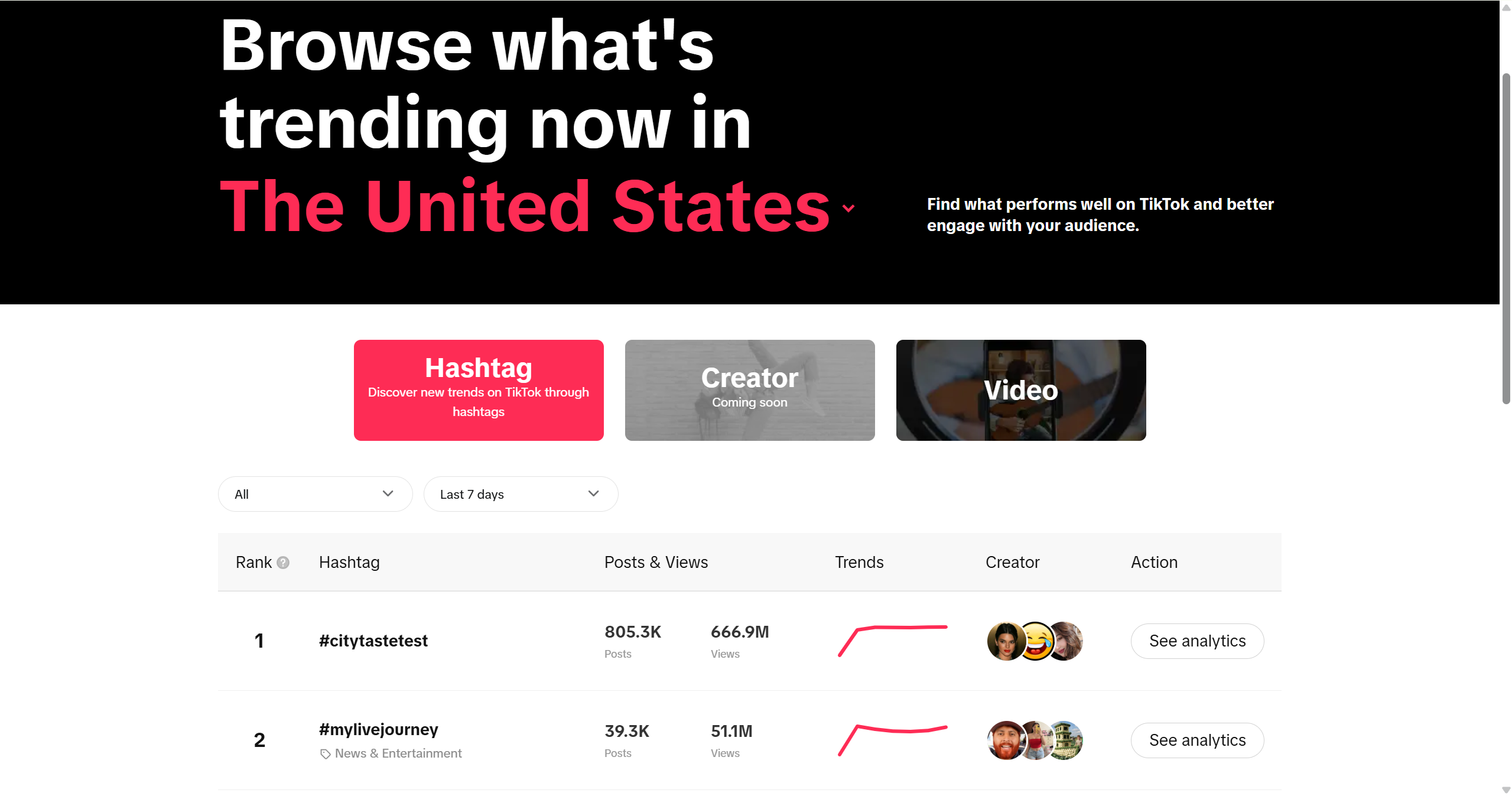
For ads, treat trends as packaging. A trending sound or format can make your idea feel current, but your message is constant. A trend with nothing to say still doesn't sell.
How to Create Ad Creative from Product Photos
Studying other brands' TikTok ads is useful, but the harder part is turning a good idea into something you can actually test.
For apparel brands, that often means creating several versions of the same product ad: a movement-focused clip, a full-look presentation, a styling concept, or a different visual hook. You don't necessarily need new photography for every variation.
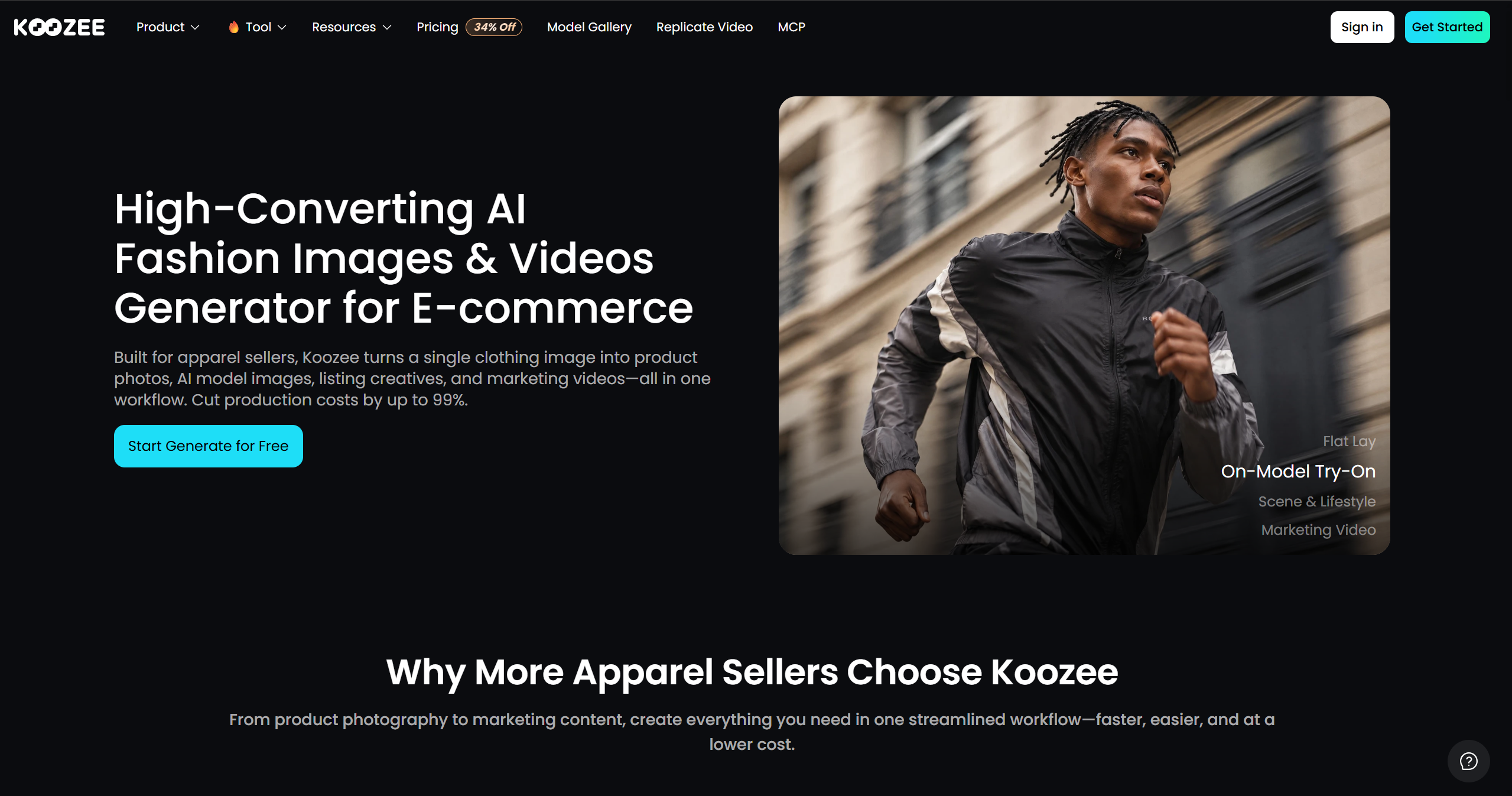
That's where Koozee fits into the workflow. Instead of starting with a blank canvas, you can use the clothing images you already have and build new fashion-focused creative videos around them. Upload a flat lay or model photo, choose the visual direction you want to explore, and turn the result into a video you can use for TikTok ads.
The useful part isn't simply making more videos. It's having more creative directions to work with when you're testing what makes a product worth stopping for.
FAQs about TikTok Ad Examples
How do I find TikTok ad examples for my niche?
Use TikTok's public Ads Library and search by product category, keyword, or advertiser. Look at several ads rather than assuming the longest-running one is automatically the best performer. Use first/last shown dates as one clue when deciding which creatives deserve a closer look.
What size and format should a TikTok ad be?
For standard in-feed ads, TikTok recommends vertical 9:16. Other aspect ratios are also supported depending on the ad setup, so check the current specifications for the format you're buying.
Can I make clothing video ads without filming?
You don't have to shoot every product. Koozee is built for apparel sellers and works from the images already in your catalog: you generate the visuals, review them, and review the generated visuals and use the ones you approve. Start with one photo.
How can I tell whether a TikTok ad example is worth studying?
Look for ads that have been running for a while, have a clear message, and give you a specific creative idea you could adapt to. Longevity is a clue, not proof of performance.
You May Be Interested

How to Go Viral on TikTok: 6 Strategies That Can Help

Fashion Ecommerce Video Ads: Types, Examples & Tips
How to Make Dropshipping Video Ads: A Complete Guide for Apparel Sellers
