How to Go Viral on TikTok: The Apparel Seller's Step-by-Step Playbook
Learn how to improve your chances of going viral on TikTok with stronger hooks, proven content formats, trend research, watch-time tactics, and a faster way to create apparel videos.


Going viral on TikTok isn't something you can guarantee. But you can improve the odds by getting six things right: the hook, content format, timing, trends, watch time, and audience interaction.
For apparel sellers, there's a second challenge: producing enough original product content to test these variables consistently.
This guide breaks down the six tactics that matter most—and how to turn proven video formats into product content without starting every video from scratch.
Key Takeaways
Win the opening seconds: Show the product, payoff, or problem immediately.
Optimize for viewing behavior: Stronger retention, rewatches, shares, and other interactions can help content earn wider distribution.
Use timing as a testing variable: Start with audience activity data, then test different posting windows.
Build around proven formats: Try-ons, styling videos, transformations, and product demonstrations naturally showcase apparel.
Follow trends selectively: Use relevant sounds, hashtags, and formats when they fit the product—not just because they're trending.
Create enough content to test: A consistent publishing cadence gives you more opportunities to learn what works.
What Does It Take to Go Viral on TikTok?
There is no official view count that defines a viral TikTok. More useful than chasing a specific number is understanding what can influence distribution.
TikTok says For You recommendations can be influenced by user interactions—including likes, shares, comments, and whether people watch or skip a video—as well as content information such as sounds, hashtags, and other signals. User interactions, including time spent watching, are generally weighted more heavily for most users.
That means a viral strategy should focus less on finding a single algorithm hack and more on creating content people choose to watch, finish, replay, share, or discuss.
For apparel brands, the formula is straightforward:
Strong hook → Relevant format → Clear product value → Better retention → More testing
No tactic guarantees virality. The goal is to make each video easier to watch, easier to understand, and worth sharing.
How to Go Viral on TikTok [6 Steps]
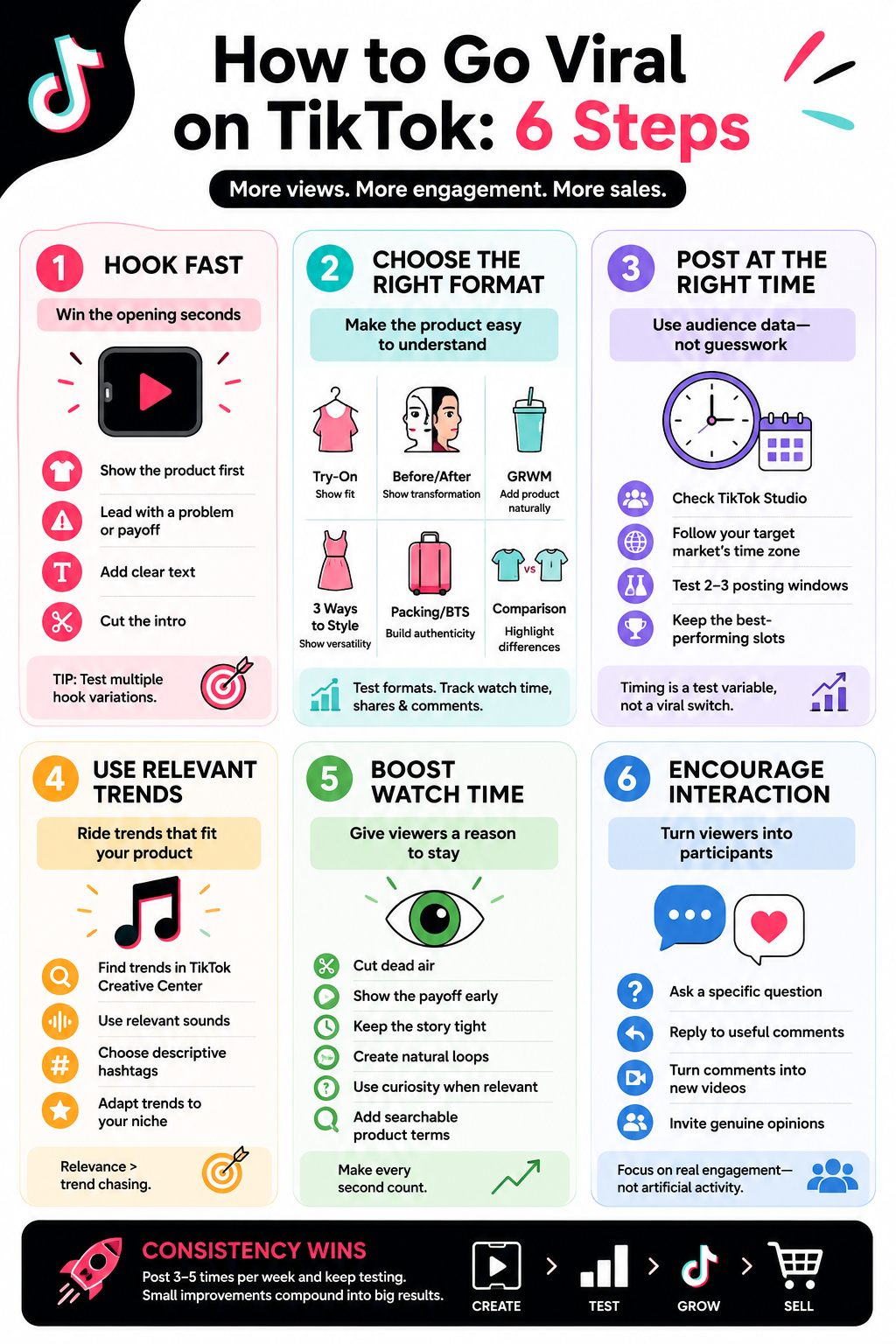
Step 1: Start With a Strong Hook
The opening seconds determine whether viewers have a reason to keep watching. TikTok's own creative guidance emphasizes the importance of the opening, recommending attention-grabbing hooks early in the video.
For apparel, lead with the product, problem, transformation, or result—not a logo or long introduction.
Try hooks like:
POV: You finally found shapewear that stays in place
Stop scrolling if you hate see-through white tops
Three ways to style this dress
Here's what the back actually looks like
Before you buy this, check the fit
Then reinforce the hook visually:
Show movement immediately — turn, walk, zoom, or reveal the garment.
Add clear on-screen text — repeat the key promise or question.
Show the product early — don't make viewers wait for the main subject.
Cut the introduction — start with the useful part.
Tip: Create several hook variations for the same product. If one angle consistently performs better, reuse the structure across other products.
Step 2: Use Apparel Product-friendly Formats
The best format depends on what the video needs to communicate. For apparel, formats that show fit, styling, details, or real-world use are especially useful.
| Format | Best use |
| Try-on | Show fit, silhouette, and styling |
| Before/after | Demonstrate a visual transformation |
| GRWM | Combine product placement with a personal routine |
| 3 ways to style | Show versatility from one product |
| Packing / BTS | Add behind-the-scenes brand content |
| Product comparison | Explain differences in fit, fabric, or style |
Don't assume one format is universally better. Test several formats around the same product and compare watch time, shares, comments, and conversions.
For lingerie, swimwear, and fitted apparel, keep the creative centered on fit, comfort, details, and styling rather than shock value.
Step 3: Test Posting Time
Posting time can influence who is available to watch your video when it goes live, but it isn't a guaranteed distribution lever. Start with your audience activity data, then test different posting windows. Post when your audience is actually scrolling, and you give every video its best shot.
Best Times to Post for Cross-Border Apparel Sellers
These aggregates are a starting point, not a rule. Your real schedule should come from your own data:
Open TikTok Studio, go to the Followers tab, and check when your followers are most active. This is your ground truth.
If you sell cross-border, post in your biggest market's prime window — a US-bound brand posts on US evening hours, not the factory's local time.
Test two slots for two weeks, compare 24-hour view counts, then lock in the winner.
✅ Recommended: Post 3–5 times a week across your two best windows. Consistency trains the algorithm faster than any single perfect timestamp.
Step 4: Use Trends and Search Signals
Use relevant trending sounds selectively. Trending audio can help your content fit into an existing trend by sound-based recommendations, but it doesn't guarantee additional reach. Choose sounds that fit your product and creative rather than forcing a trend.
Use a small number of relevant hashtags. Hashtags can help TikTok understand what your content is about, but they aren't a shortcut to virality. Start with 1–3 specific tags that match the product, audience, or content format, and avoid stuffing generic tags such as #fyp or #viral.
1–2 broad niche tags: #fashiontiktok, #ootd
1–2 specific tags: #tryonhaul, #swimwear, #lingerie
0–1 brand or community tag: #yourbrandname, #smallbusinesscheck
Step 5: Make Retention the Priority
The algorithm's favorite number is how much of your video people actually watch. Optimize for it directly:
Cut dead air. Every second without motion, product, or text is a reason to swipe.
Keep the video as short as the story allows. A 15–35 second product video can work well for quick demos, but longer videos can also perform when the content gives viewers a reason to keep watching.
Loop the ending into the beginning. If the last frame flows into the first, replays stack — and replays are one of the strongest signals.
Open loops in text overlays. "The third outfit is the problem" holds viewers to the end.
Write captions for search. TikTok SEO is real — put what the product is in the caption ("linen midi dress for summer"), because a growing share of shoppers search TikTok the way they search Google.
📌 Note: Distribution can lag. TikTok may take up to 24 hours to fully push a video, so judge performance at the 24–48 hour mark, not at hour two.
Step 6: Trigger Comments for Engament
Comments tell the algorithm the video is worth expanding. Give viewers a reason to comment. Ask a genuine product-related question, respond to useful comments, and turn recurring questions into follow-up videos when appropriate:
End with a low-effort question — "Which color would you actually wear?" beats "leave a comment below."
Reply to every early comment within the hour. Each reply counts as fresh engagement and invites more.
Take a gentle, real opinion — "I don't get the beige trend" invites debate without violating guidelines.
⚠️ Warning: Don't buy comments, views, or other artificial engagement. Fake engagement can violate TikTok's policies and undermine the quality of your performance data.
Create More Apparel Videos Without Starting From Zero
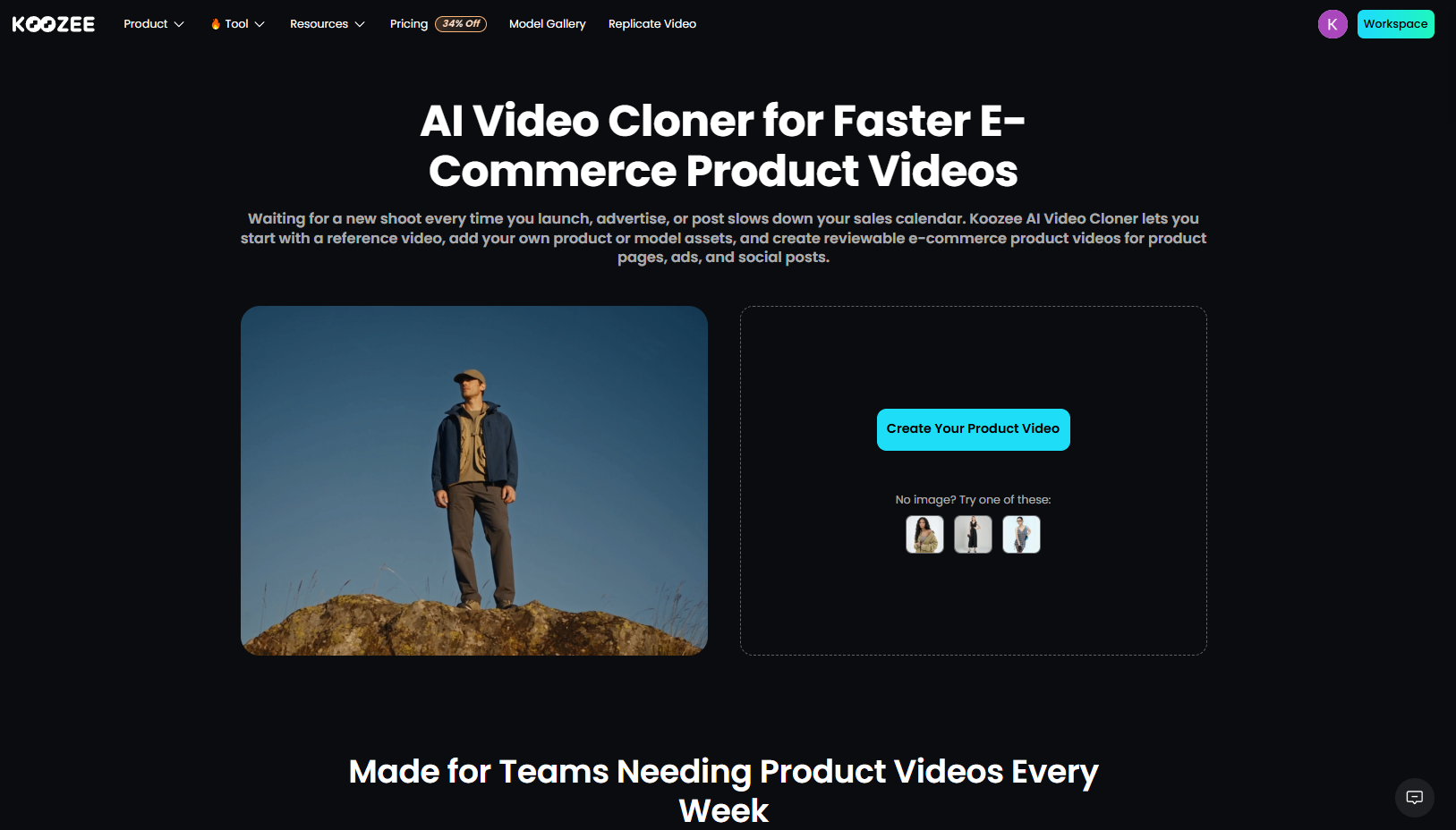
For apparel sellers, producing enough content to test TikTok formats can be the real bottleneck. Koozee is an AI visual production platform built for apparel e-commerce, turning existing product assets into AI try-on images, model visuals, lookbooks, product videos, listing assets, and other marketing content. With the Viral Video Clone feature, you can also use a reference video to create a new product video with your own product, clothing, or model assets.
Key Features
AI Video Cloner: Use a reference video's pacing, shot style, and product-presentation structure to create a new video with your own apparel assets.
AI Try-On & Model Visuals: Turn existing product images into apparel visuals without a new photoshoot.
Product Videos & Lookbooks: Create additional marketing assets from existing clothing images.
Shopify Workflow: Reuse Shopify product images and publish approved visual assets back to your store.
How It Works
Step 1: Find a proven video format: Choose a TikTok video you want to adapt.
Step 2: Upload the reference: Add the reference video to Koozee.
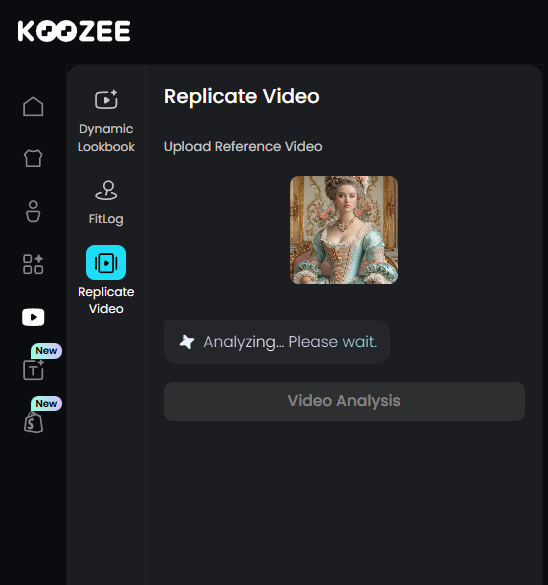
Step 3: Add your product assets: Upload your clothing, product, or model images.
Step 4: Generate the video: Koozee creates a new product video based on the reference.
Step 5: Review and test: Check the output, make any needed adjustments, then test it on TikTok.
Koozee reduces the production work needed to test more product-video concepts. It doesn't guarantee virality, and AI-generated content should still be reviewed for garment details, color, fit, patterns, motion, and overall realism before publishing.
FAQ
How many views do you need to go viral on TikTok?
There's no official number. Most creators treat 100,000+ views within a few days as the informal benchmark, but velocity and engagement ratio matter more than the raw count — a video hitting 50K views in 24 hours with strong comments is outperforming one that crawls to 100K in a month.
Can I go viral on TikTok without followers?
Yes. TikTok distributes content based on video signals — watch time, completion, engagement — not follower count. New accounts routinely go viral on their first few posts; this is one of the few platforms where audience size doesn't gate reach.
When's the best time to post on TikTok for e-commerce apparel?
First check TikTok Studio's Followers tab for your audience's actual active hours and post in your two best windows 3–5 times a week.
How long should a TikTok video be to go viral?
Completion rate matters, but it isn't the only factor. The right length depends on how much information the viewer needs and whether the video keeps attention throughout.
How many hashtags should I use to go viral?
Start with a small number of relevant hashtags rather than filling the caption with generic tags. Pair broad niche tags (#fashiontiktok) with product-specific tags (#tryonhaul, #swimwear). Avoid #fyp and #foryou — generic tags don't help discovery.
What should a clothing brand post to go viral?
Formats that answer real shopper doubts: try-on hauls, before/after transformations, packing-order videos, and GRWM clips with product placement. Authentic fit content outperforms polished ads for apparel accounts.
How can I create viral-worthy clothing videos without booking a photoshoot?
AI visual production tools close this gap. Koozee turns your existing clothing product photos into model try-ons, lookbooks, and viral-format video clones, so you can keep up with a 24–48 hour trend cycle without scheduling shoots. New users can claim 30 free credits — and you should still review every AI output before posting.
You May Be Interested

8 Best Virtual Try-On Apps for Cosplay Costumes (2026)

How to Recreate a Viral TikTok Product Video: 4 Practical Methods

7 Best Fashion Video Generators for Ecommerce Brands in 2026