Why Is Fashion E-Commerce Return Rate So High? (Causes & Fixes)
Learn how to protect your profit margins by uncovering what drives apparel returns and implementing scalable visual workflows to bridge the consumer expectation gap.


Online shopping has made buying clothes effortless — but returns have become just as frictionless, quietly eroding fashion brands’ margins.
NRF’s 2025 Retail Returns Landscape report put online return rates at 19.3% and total retail returns at $849.9 billion. Apparel is especially exposed, and fit-sensitive categories such as dresses, intimates, swimwear, and occasionwear can run higher. In the U.S., returns represent hundreds of billions of dollars in merchandise each year, making them a major margin issue for retailers.
So why are fashion return rates so high, and what can brands actually do about it? This article breaks down the key drivers and outlines practical ways to reduce returns at scale.
What Causes High Return Rates in Fashion E-Commerce?
Before diving deep, here's a quick map of the primary culprits:
| Cause | Estimated Share of Returns |
| Sizing and fit mismatches | Up to 70% of fashion returns |
| Misleading product images or descriptions | ~22% of returns |
| Bracketing (intentional multi-size buying) | Practiced by 51% of Gen Z & Millennials |
| Product defects or wrong item sent | ~31% of returns |
| Wardrobing (buy-use-return fraud) | Costs retailers $100B+ annually |
| Frictionless return policies | Behavioral amplifier across all categories |
Each of these deserves its own deep dive — because the fix for a sizing problem looks very different from the fix for a photography problem.
Deep-Dive 1: Sizing and Fit Issues — The Biggest Return Driver
If you're asking how sizing and fit issues contribute to clothing returns, the short answer is: more than any other single factor.
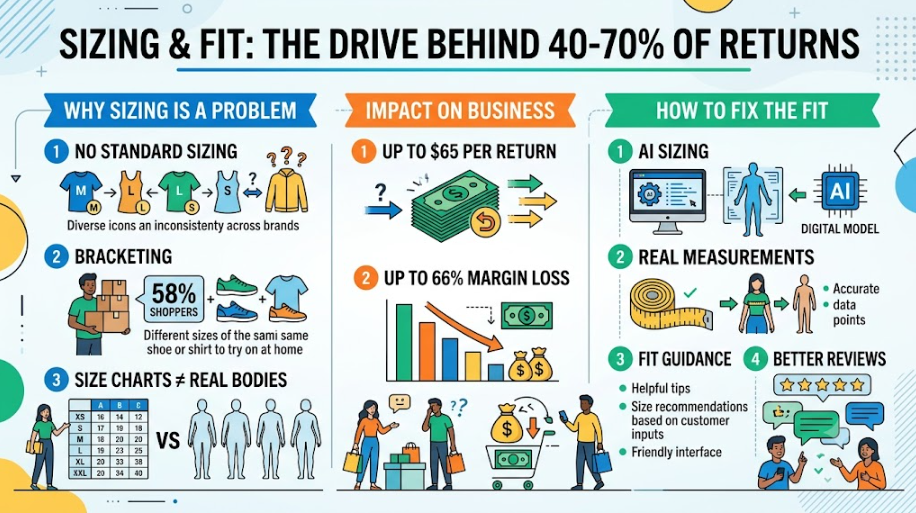
Sizing and fit mismatches account for 40–70% of all fashion returns, depending on the category. For fitted clothing, activewear, and intimates, that number skews toward the top of the range. This is the single biggest lever brands can pull to reduce return volume.
Why Sizing Creates Returns
No Universal Sizing Standards: A “Medium” isn’t the same everywhere. Different brands use different sizing systems, leaving shoppers unsure and forcing them to guess.
The Rise of Bracketing: Many shoppers buy multiple sizes or colors to find the right fit. 51% of Gen Z and Millennials regularly bracket, creating extra returns and costs for brands.
Size Charts Don’t Reflect Real Bodies: Traditional charts miss body variations like torso length, shoulders, hips, and bust. Without better fit guidance, shoppers often choose the wrong size.
The Fix: From Static Charts to Dynamic Fit Tools
The most effective interventions here are:
AI Size Advisors: By matching a shopper's measurements with the garment’s precise geometry—rather than generic charts—AI fit tools provide highly accurate size recommendations. Implementing these predictive solutions has proven to drive down size-related return rates across the industry significantly.
Detailed garment measurements (chest, waist, hip, length, inseam) listed alongside generic size labels, so shoppers can measure themselves and compare directly.
Fit notes in product copy — e.g., "This style runs narrow through the shoulders; we recommend sizing up if you're between sizes."
Customer reviews filtered by body type, so shoppers can find reviews from people with similar measurements.
Deep-Dive 2: Misleading Product Images and Descriptions
Sizing is the biggest driver, but it's not the only one. What share of fashion returns is due to misleading product images or descriptions? Research puts it at around 22% of all returns — and that number is almost certainly undercounted, because shoppers often cite "didn't fit" when the real issue was that the item looked nothing like the photos.
Three visual failures show up again and again across high-return SKUs:
Over-processed studio shots — saturated lighting, heavy retouching, and pinned-back fabric that hides how a garment actually drapes and fits on a real body.
Flat-lay-only listings — clean and easy to produce, but they tell a shopper nothing about how the waistband sits, whether the neckline gapes, or how the hem falls in motion.
Vague product copy — "soft fabric," "relaxed fit," "lightweight material" leave shoppers guessing on stretch, opacity, weight, and true sizing behavior. When the guess is wrong, the item comes back.
The common thread: shoppers are making purchase decisions without enough visual context. The fix isn't more photography budget — it's smarter visual production.
The Fix: On-Model Visuals at Scale with Koozee
The most effective way to close the expectation gap is to give shoppers more realistic on-model context for how a garment may look when worn — across multiple model styles, sizes, and angles. The problem is that traditional photoshoots make this prohibitively expensive for most sellers. Booking models, studios, photographers, and editors for every SKU, every colorway, and every variation simply doesn't scale.
This is the problem Koozee is built to solve.
Koozee is an AI visual production platform for apparel e-commerce sellers — optimizing the full visual workflow from raw product images into professional, tailored marketing assets. It enables Shopify-connected workflows, allowing sellers to efficiently generate, preview, and manage visuals before taking them live.
By utilizing your own uploaded model photos, Koozee helps you adapt and scale your visual assets seamlessly. Sellers can leverage the AI Face Swap tool to effortlessly change models and styling, ensuring the visuals align perfectly with your brand's look.
Beyond static images, Koozee supports short-form videos, dynamic lookbooks, and viral content formats, helping brands produce high-converting assets at scale. It transforms your existing product images into on-model try-ons, distinct scene variations, and apparel videos — all while streamlining your production pipeline without arranging a traditional photoshoot for every SKU.
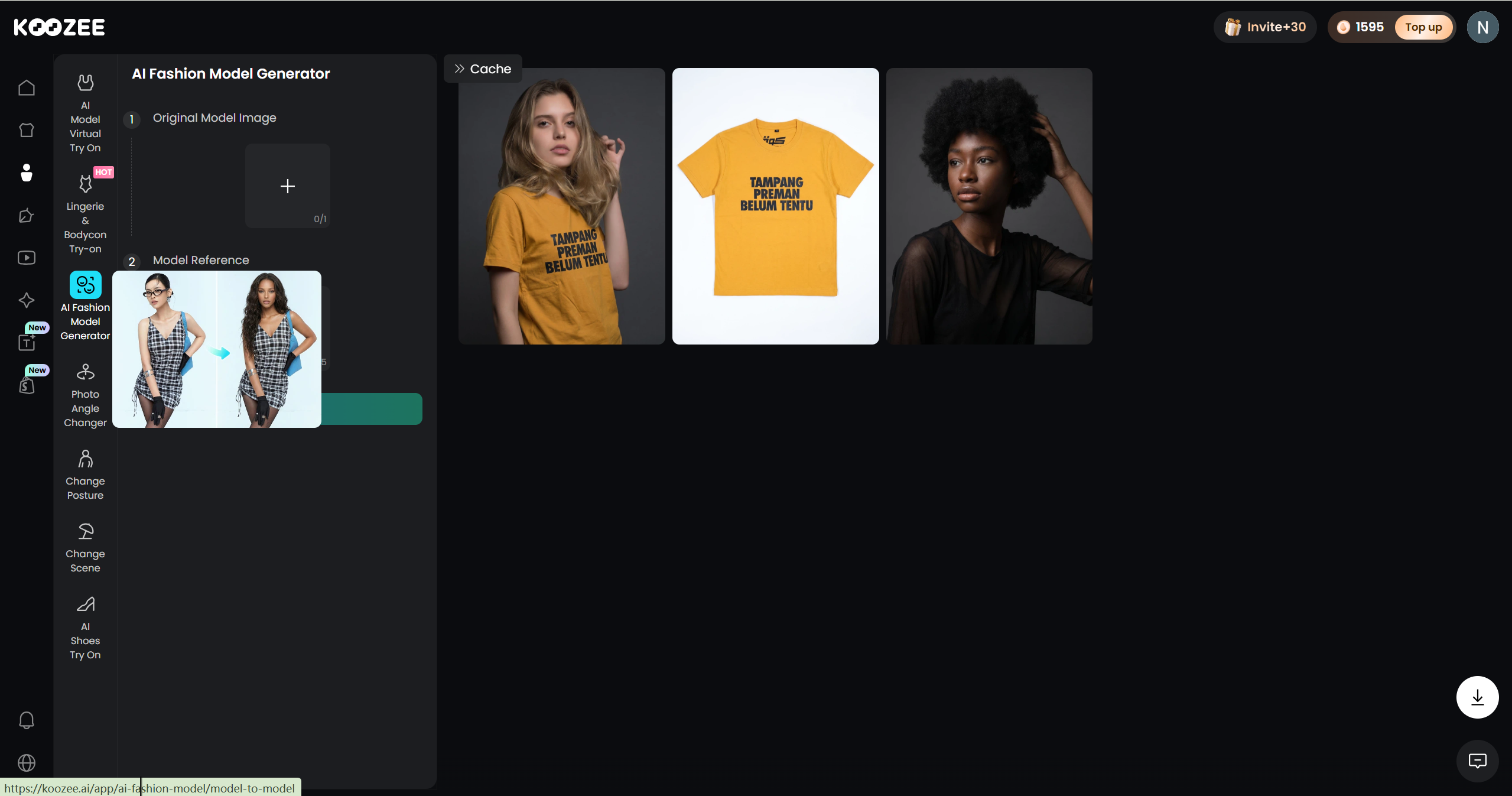
Here's what Koozee can do for your product pages:
AI Apparel Try-On
Upload a flat product image — a flat-lay, ghost mannequin, or even a hanger shot — and Koozee generates realistic on-model try-on visuals showing how the garment fits and drapes on a real body. Shoppers can see the silhouette, the fit through the waist and shoulders, and how the fabric falls — the exact information that prevents "it looked different in the photo" returns.
Change Model
Koozee’s Change Model feature helps sellers create different model looks for the same garment, which can support broader visual representation.
Change Scene & Lifestyle Context
Studio-white backgrounds tell shoppers nothing about how a garment looks in real life. Koozee's Change Scene feature places the same on-model visual into different lifestyle environments — outdoor, urban, interior — giving shoppers a more realistic sense of the product in context.
Apparel Videos & Dynamic Lookbooks
Static images can't show how fabric moves. Koozee's video generation features turn product images into short apparel videos and dynamic lookbooks that show drape, movement, and texture in motion. For categories where fabric behavior drives purchase decisions — flowy dresses, knitwear, activewear — this is a direct return-reduction tool.
Flat-Lay, Ghost Mannequin & Detail Images
For sellers who need clean catalog-style images alongside on-model shots, Koozee also generates flat-lay and ghost mannequin visuals from the same product input — keeping your full listing visual set consistent and production-efficient.
For Shopify sellers, Koozee's connected workspace lets you pull in existing product images directly from your store, generate and preview new visuals, and manually publish approved assets back to Shopify — without the download-rename-upload cycle that slows down most catalog updates.
Beyond Fit: The Rise of Bracketing and Policy Abuse
Sizing and imagery are the structural causes of high return rates. But there's a behavioral layer on top that makes the problem worse — and it's harder to fix because it's driven by shopper psychology, not product quality.
Wardrobing: The Rental Economy Hidden in Your Returns
Wardrobing is the practice of buying an item for a specific occasion — a formal event, a photoshoot, a wedding — wearing it once, and then returning it. The shopper gets the use of the item for free. The retailer gets back a worn garment that can no longer be sold as new.
Wardrobing creates significant losses for retailers because returned items may be worn, damaged, or no longer sellable as new. It's most common in high-ticket categories: formal dresses, designer pieces, occasion wear. And it's genuinely difficult to prevent without alienating legitimate customers.
The Free Returns Trap
Offering free, frictionless returns was a competitive necessity when Amazon normalized it. But it has had an unintended consequence: it has conditioned shoppers to treat online purchases as trials rather than commitments.
When there's no friction in the return process, the mental calculus shifts. "I'll just order it and see" becomes the default. Bracketing becomes rational. Wardrobing becomes low-risk. The return rate climbs.
Some brands are now experimenting with return fees for certain categories, tiered return windows, or restocking fees for high-return SKUs. The data suggests these interventions do reduce return volume — but they also reduce conversion rates if not implemented carefully. The key is making the policy feel fair, not punitive.
How E-Commerce Brands Can Combat High Return Rates
There's no single fix that eliminates fashion returns. But a systematic approach to the product detail page (PDP) can meaningfully reduce return rates — and protect margins without sacrificing the customer experience.
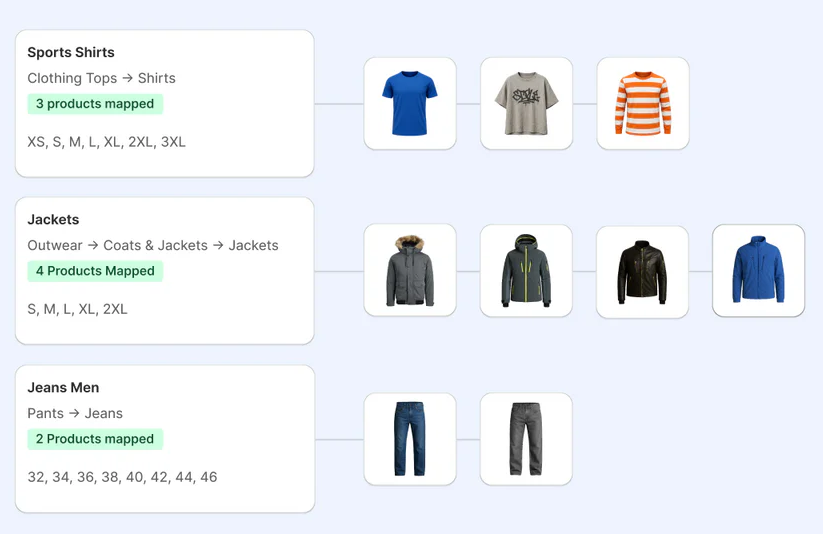
Step 1: Implement Interactive Fit Technology
Replace static size charts with dynamic tools. AI size advisors that take shopper measurements and recommend a specific size based on the garment's actual cut have been shown to reduce sizing returns by up to 27%. Even a simple "how does this style run?" note in the product description helps.
Step 2: Upgrade Your Visual Assets
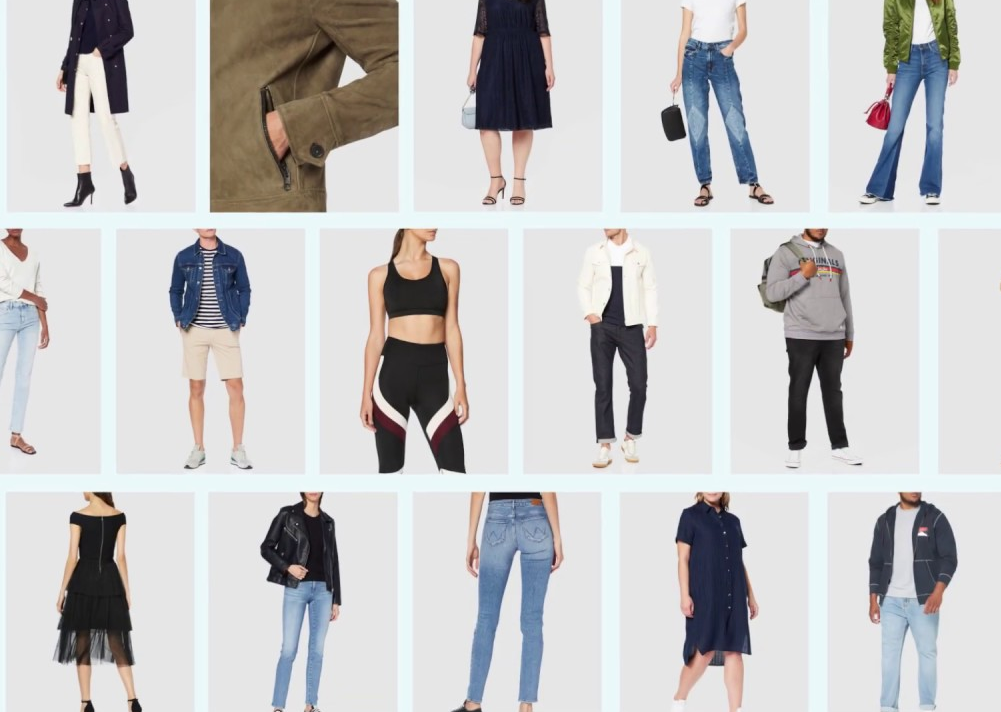
Mandate on-model photography for every SKU. Show the model's height and the size they're wearing. Add 360-degree views or short video clips that show how the fabric moves. Include fabric close-ups that accurately represent texture and weight. Represent multiple body types where possible. As covered in Deep-Dive 2, AI visual production tools like Koozee make this practical at catalog scale — generating on-model try-ons, model variations, and apparel videos from existing product images, without a photoshoot for every SKU.
Step 3: Rewrite Your Product Copy
Stop writing vague descriptions. Write specific ones. Include:
Fabric composition (e.g., "78% polyester, 18% nylon, 4% spandex")
Stretch level ("minimal stretch" vs. "4-way stretch")
Opacity ("fully lined" vs. "slightly sheer in direct light")
Weight ("lightweight, airy feel" vs. "structured, medium weight")
Fit notes ("runs true to size; narrow through the shoulders")
Care instructions
Every detail you include is a question a shopper doesn't have to guess the answer to.
Step 4: Steer Toward Exchange-First Return Flows
When a shopper initiates a return, the default shouldn't be a refund. It should be an exchange. Returns management software can present size or color alternatives at the point of return, turning a lost sale into a retained customer.
Incentivizing exchanges over refunds — through faster processing, bonus credits, or free exchange shipping — can meaningfully reduce net return volume while keeping the customer relationship intact.
Step 5: Audit Your Highest-Return SKUs
Not all returns are created equal. Some SKUs have return rates of 5%. Others have return rates of 60%. The ones at the top of that list are telling you something specific — either the sizing is off, the photos are misleading, the description is vague, or the product itself has a quality issue.
Pull your return reason data by SKU. Identify whether the pattern is fit-related or expectation-related. Then fix the specific problem: update the size chart, reshoot the product, rewrite the description, or address the quality issue at the source.
Conclusion: The PDP Is Your Best Return-Reduction Tool
Fashion returns won’t disappear, but brands can reduce preventable returns by improving their product detail pages (PDPs).
Fit and sizing issues are widely reported as one of the biggest drivers of fashion returns, while misleading images and vague descriptions also create expectation gaps. Better sizing information, more accurate visuals, and clearer product descriptions can reduce preventable returns, especially when brands start with their highest-return SKUs.
Start with your highest-return SKUs: identify whether the issue is fit or presentation. If it’s a visual problem, solutions like Koozee help create on-model images, try-on visuals, and product videos that give shoppers confidence before buying.
Frequently Asked Questions
What is the average return rate for fashion e-commerce?
NRF’s 2025 Retail Returns Landscape report put online return rates at 19.3%, while Coresight Research estimated the U.S. online apparel return rate at 24.4%. Fit-sensitive categories can run higher, but exact rates vary by brand, category, price point, and return policy.
Why is the return rate for online clothing so much higher than in-store?
In-store shoppers can touch the fabric, try items on, and assess fit before buying. Online shoppers rely entirely on photos and descriptions. When those visuals are misleading or incomplete, the item comes back.
What causes the most clothing returns online?
Fit and sizing issues are generally the largest driver of online clothing returns. Product-image mismatch, vague descriptions, quality issues, bracketing, and policy abuse also contribute. Exact percentages vary by brand, category, and return-reason data.
What is bracketing in e-commerce?
Bracketing is when a shopper intentionally orders multiple sizes or colors of the same item, keeps the one that fits, and returns the rest. It's practiced by over half of Gen Z and Millennial shoppers and significantly inflates return volumes.
How can on-model photography reduce return rates?
On-model images show shoppers how a garment actually fits on a real body — the silhouette, drape, and proportions — rather than how it looks pinned flat. This closes the expectation gap that drives a large share of "didn't look like the photo" returns.
Can AI tools help reduce fashion return rates?
Yes. AI fit advisors can reduce sizing returns by up to 27%. AI visual production tools like Koozee help sellers generate on-model try-on visuals, model variations, and apparel videos from existing product images — giving shoppers the visual context they need to buy with confidence, without the cost of traditional photoshoots.
You May Be Interested

Ecommerce Return Rate: What It Is & How to Reduce

Reduce Return Rates E-commerce: 8 Strategies for Fashion Sellers

9 Best AI Fashion Model Generators for E-commerce (2026)
