TikTok Video Ideas: What to Post and How to Pick Your Niche
What to post on TikTok? This post shares 12 TikTok video ideas and formats, plus AI tool for generating fashion videos only with photos.


Picture this. You open TikTok to post something, and… nothing comes. You scroll for an hour "looking for inspiration" and close the app without filming a single thing.
The problem usually isn't a lack of creativity. It's not having a simple system for turning what you know, see, or sell into repeatable videos.
You don't need a hundred ideas. You need a clear topic, a few formats you can start or repeat, and a quick way to tell which ones are worth making again. This guide covers how to choose what your account is about, 12 video ideas you can try this week, and how to tell what's actually working.
Key Takeaways
Choose a topic you can keep creating around: The best TikTok topic is the one you can talk about for months without running out.
Keep a few recurring themes: 3–4 content pillars can give you enough variety without making your account feel random.
Watch behavior matters: Strong hooks and videos that hold attention can help, but TikTok also considers interactions and video information such as captions and sounds.
Start with 12 formats below and adapt them to your niche.
What Topic is Best for Your TikTok Account?
If you're starting from scratch, choosing your topic first makes it much easier to find repeatable video ideas.
Check out three things below for choosing a practical topic for yourself:
You know it — you have real experience, a skill, or a genuine interest.
People look for it — there's demand: searches, questions, comments you keep seeing.
You can film it often — it works on a phone, in a small space, in under a minute.
If you can quickly come up with 20 ideas, you probably have enough room to build a content series. If you struggle to reach five, the topic may be too narrow. Then, break it into 3–4 content pillars — the themes you rotate. A clothing seller might run styling, fit-and-quality, and behind the scenes. Pillars keep you from drifting and make your account instantly clear to a new viewer.
12 TikTok Video Ideas You Can Try Immediately
So what kind of videos should you make on TikTok? Nine times out of ten, it's one of these twelve formats. Swap in your topic and film.
Answer the question you get asked most. Turn your comments, DMs and TikTok searches into content. Record a 15-second reply to one real question.
"3 things I wish I knew about ___." Fast value and easy to film. Hook: "I wasted a year before learning these three."
Show the process from start to finish. Raw to finished, sped up or real-time. People love watching something come together.
Test a viral claim and give a verdict. Try the trend, hack, or product, then say what really happened. Honest results beat hype.
Compare two options. Cheap vs. expensive, Option A vs. B, beginner vs. advanced. Explain what changes and who each option is for.
Myth vs fact. Name a common belief in your niche, then correct it in 20 seconds.
Before and after. The clearest format there is — just show the change.
"Nobody talks about this." Share a common frustration (from Reddit or X), overlooked detail, or unpopular lesson in your niche. Make the claim specific instead of relying on a generic hot take.
Expectation vs reality. Show what people assume will happen, then show what actually happens. This works especially well for products, processes, tutorials, and behind-the-scenes content.
React or stitch to a post in your niche. Use the original video as a starting point, then add your own explanation, reaction, example, or opinion.
Behind the scenes of a normal day. Show how you actually make, pack, test, source, edit, or run something. The ordinary details can give viewers a reason to follow your process.
One product, many ways. Show three ways to use, style, apply, or think about one product, tool, technique, or skill.
💡 Pro tip: Save every idea that makes you think "I could film that." Keep them in one list. Ten minutes of collecting beats an hour of scrolling.
How to Decide Which TikTok Idea is Worth Repeating
The ones people watch to the end are video ideas that do well. Value an idea with retention rather than by views alone. Look at watch behavior alongside likes, comments, shares, and other available analytics to see which formats are worth testing again.
Here are four things you can pay attention to separating a video that works from one that flops:
The opening. Give viewers a clear reason to keep watching from the start. A strong opening matters, but the payoff still needs to deliver.
Watch time and completion. A short video people finish beats a long one they swipe past.
Make the format fit the platform. A phone-shot video can work perfectly well, but polished production isn't automatically a disadvantage. Focus on whether the video communicates the idea clearly and keeps viewers interested.
A reason to rewatch. A twist, a list, or a payoff that makes people loop back around.
How to test ideas fast:
Batch film 3–4 videos in one sitting, post them across the week, and check your retention graph in TikTok's analytics after each one.
Use TikTok Search for more video ideas
TikTok's Creator Search Insights can show topics people are searching for, including content gaps where a topic gets search interest but doesn't have many videos yet. Use those topics as prompts for your next batch of videos instead of relying only on trends. Availability varies by region.
How to Make Fashion TikTok Videos from Product Photos
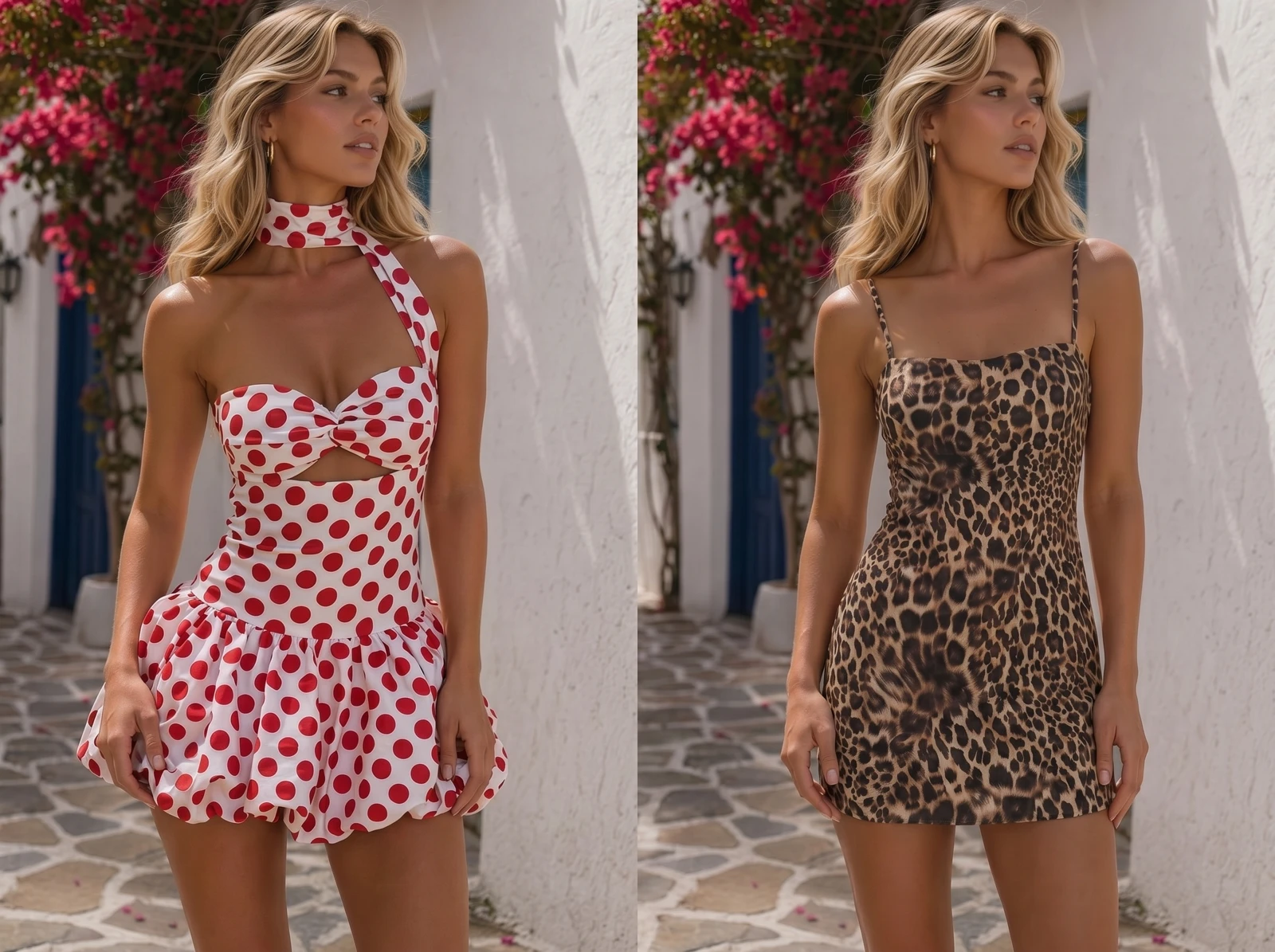
If you sell clothes, the existing product images are one of your best idea sources. One product photo can become a try-on, a walking lookbook clip, an outfit video, or a before-and-after post — without starting every video with a new shoot.
Koozee can turn apparel images into those fashion videos. It is an AI visual production platform built for apparel sellers. Simply upload a flat lay photo or static model images and turn them into walking videos, outfit videos, or any ad videos.
For example, one dress could become:
a model try-on showing the full look
a walking video that shows how the outfit moves
a short outfit clip for a TikTok edit
a “3 ways to style it” video using the same product visuals
Try it with one of your own clothing photos — you get 30 free credits to start.

FAQs about TikTok Video Ideas
How often should I post on TikTok?
There isn't one posting frequency that works for every account. Pick a schedule you can maintain consistently, then use your analytics to learn which topics and formats perform best with your audience.
Do I need an expensive camera or lighting for TikTok video?
No. A recent phone, natural light, and clear audio will take you further than gear will.
How do I find viral video inspirations?
Study the format, not the content. When a video in your niche does well, ask why it worked — the hook, the structure, the payoff — then rebuild that same structure around your own topic.
How long should a TikTok video be?
Make the video long enough to deliver the idea. A quick tip may take 15 seconds, while a tutorial, story, or product demo may need much longer.
Can I make TikTok videos only from product photos?
Yes. If you already have apparel product images, you can use AI tools to turn them into short-form video assets instead of starting with new footage. Koozee is designed for this apparel workflow, including fashion videos, try-on visuals, and lookbook-style content.
You May Be Interested

How to Use AI Models for TikTok Shop: 3 Methods for Sellers
How to Go Viral on TikTok: 6 Strategies That Can Help

9 Best AI Fashion Model Generators for E-commerce (2026)