How to Localize Your Apparel Ecommerce Store for Global Markets (Step-by-Step)
Ecommerce localization helps you expand new market. This post introduce what ecommerce localization is, benefits, and how to localize your apparel shop easily.


You've built a clothing store that converts well into your home market. The next step is expanding to a new country. Then you need to do e-commerce localization. But what exactly is localization in e-commerce, is it worth, how to localize a product and store?
For apparel sellers and suppliers specifically, localization isn't a nice-to-have — it's the difference between a store that feels foreign and one that feels built for the customer standing in front of it.
This guide walks you through what ecommerce localization actually means for clothing businesses, why it matters, and exactly how to implement it market by market.
Key Takeaways
Ecommerce localization goes beyond translation: It adapts your entire store — visuals, sizing, payments, SEO, and cultural cues — to feel native to each target market.
Apparel has unique localization challenges: Size chart conversion, model diversity, and culturally appropriate styling are critical for clothing sellers in ways that don't apply to most other product categories.
Visual localization is often the highest-ROI step: Customers trust products more when they see them on models who look like them. Today, apparel-specific AI tools allow sellers to generate hyper-local model visuals from existing photos without booking international photoshoots.
Benefits of ecommerce localization include lower return rates: Localized size charts and fit guidance can significantly reduce the ~70% of apparel returns caused by sizing issues.
Start with one market, not all markets: Prioritize your highest-traffic international market, localize it fully, measure results, then expand.
What Is Ecommerce Localization?
Ecommerce localization is the process of adapting your online store to meet the linguistic, cultural, legal, and behavioral expectations of a specific target market — so that shopping feels native, not foreign, to customers in that region.
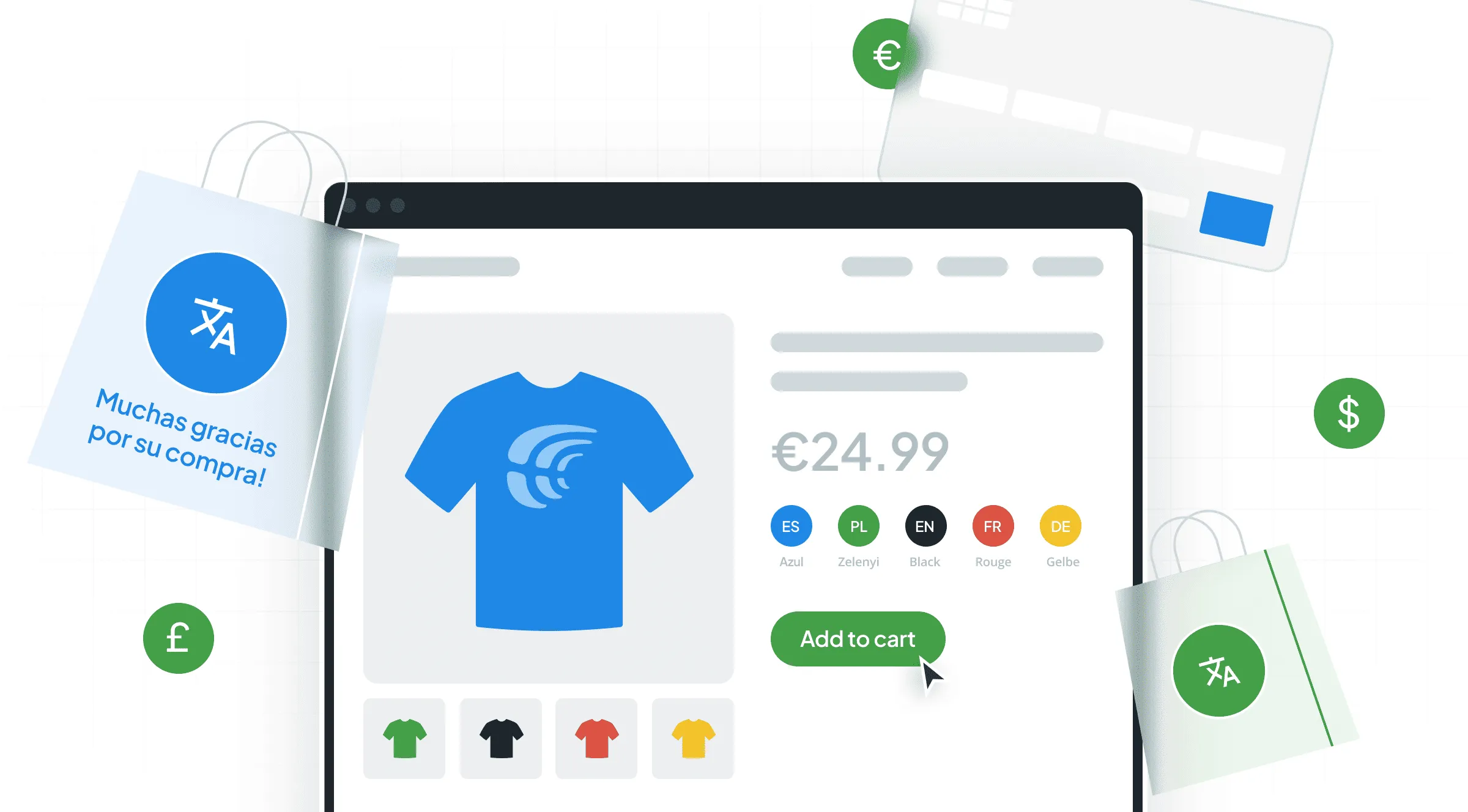
It's often confused with translation, but translation is just one component. A translated store still shows prices in the wrong currency, uses sizing charts that don't match local conventions, and features models that don't reflect the local customer base. Localization addresses all of it.
For apparel sellers, the definition extends further. Clothing is one of the most culturally sensitive product categories: sizing standards vary by country, modesty norms differ by region, seasonal calendars don't align globally, and the visual language of fashion is deeply tied to local identity. A clothing store that hasn't localized its visuals, sizing, and cultural framing is leaving significant revenue on the table — even if the translation is perfect.
📌 Note: Research consistently shows that 76% of online shoppers prefer to buy in their native language, and 40% will not purchase from sites in other languages. For apparel, where trust and fit confidence are critical, this effect is amplified.
What Are the Benefits of Ecommerce Localization for Apparel Sellers?
Before diving into implementation, it's worth understanding why localization produces outsized returns for clothing businesses specifically.
Higher Conversion Rates in New Markets
When a customer lands in a store that speaks their language, shows prices in their currency, and features models who look like them, the psychological friction of "is this store for me?" disappears. That friction is one of the primary reasons international traffic doesn't convert at the same rate as domestic traffic.
Significantly Lower Return Rates
Returns are the silent margin killer in apparel ecommerce. Sizing is the #1 cause, accounts for up to 70% of clothing returns. When your size chart is in the wrong units (inches vs. centimeters), or uses a sizing convention that doesn't match the local standard (US vs. EU vs. UK sizing), customers guess wrong and return the product. Localizing your size charts and fit guidance directly reduces this.
Reduced Cart Abandonment at Checkout
Customers abandon carts when they don't see a payment method they understand and trust. In Germany, many shoppers expect invoice payment (Klarna). In Brazil, Boleto Bancário is widely used. In Southeast Asia, digital wallets dominate. Offering only credit card checkout in an unmatched market means losing customers at the final step.
Improved International SEO
Localized content — written in the target language, optimized for local search terms, and structured with hreflang tags — ranks in regional search results. A store that only exists in English is invisible to shoppers searching in German, Japanese, or Portuguese.
Stronger Brand Trust and Loyalty
A localized store signals investment and respect. Customers notice when a brand has taken the time to understand their market — and they reward it with loyalty. This is especially true in fashion, where brand identity and cultural resonance are closely linked.
8 Strategies for Apparel Ecommerce Localization
1: Choose Your Target Market Strategically
Don't try to localize everywhere at once. Start with the market that offers the best combination of existing demand and localization feasibility.
How to identify your priority market:
Open your analytics platform (Google Analytics, Shopify Analytics, etc.) and filter traffic by country.
Identify countries with meaningful organic or paid traffic but low conversion rates compared to your home market — this gap often signals a localization opportunity.
Cross-reference with market size data for your apparel category. Statista's global apparel market data provides country-level revenue benchmarks.
Assess localization complexity: EU markets share GDPR requirements; English-speaking markets (UK, Australia, Canada) require less translation work; Asian markets often require deeper cultural adaptation.
Select one market. Localize it fully. Measure results before expanding.
💡 Pro tip: For cross-border apparel sellers, Germany, the UK, and Australia are often the highest-ROI first localization targets — strong purchasing power, established ecommerce behavior, and manageable cultural distance from US/global brands.
Best for: Sellers with existing international traffic who want to convert it more efficiently before investing in new market acquisition.
2: Localize Your Sizing and Fit Information
This is the single most impactful localization step for apparel sellers. Get this wrong and every other localization effort is undermined by returns and negative reviews.
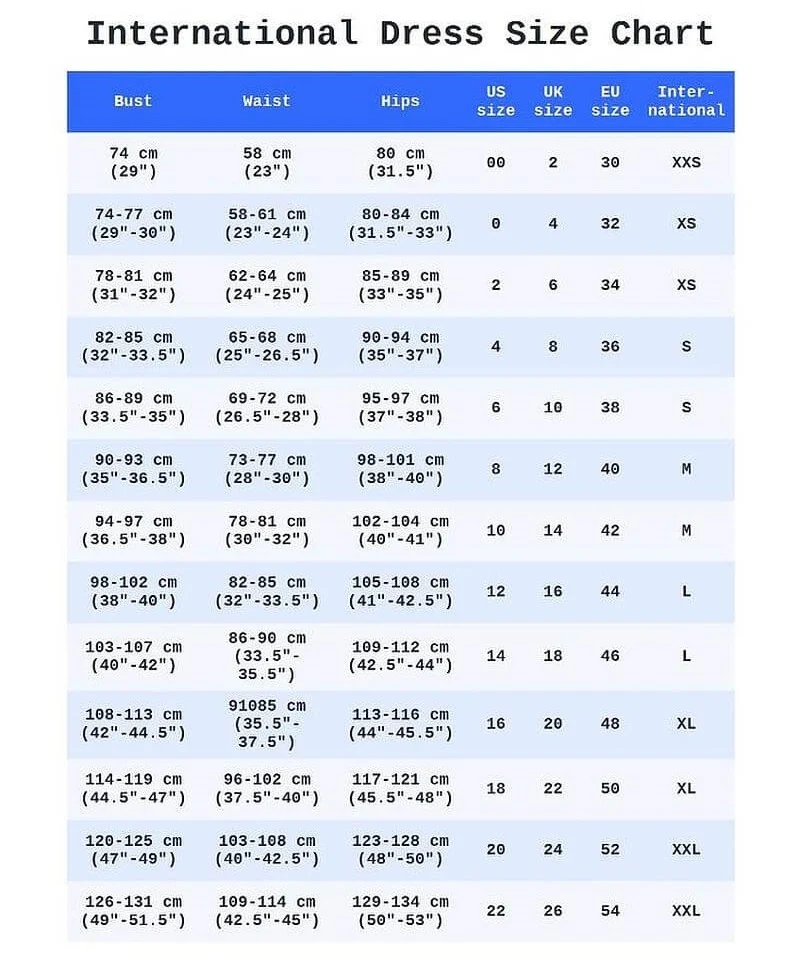
How to localize sizing:
Identify the sizing convention used in your target market (US, EU, UK, IT, FR, JP, KR, CN — each has its own standard).
Build a conversion table that maps your current sizing to the local standard. For example, a US women's size 8 = EU 38 = UK 12.
Add a localized size chart to every product page — not just a generic conversion table buried in the footer.
Include both measurement units: centimeters for most international markets, inches for the US and UK.
For fitted categories (lingerie, swimwear, bodycon, activewear), add body measurement guidance — bust, waist, hip — in the local unit.
Consider adding a "How to measure yourself" section with a simple diagram. This reduces sizing uncertainty and return rates.
⚠️ Warning: Do not rely on automated size conversion plugins alone. Many contain errors for specific categories (e.g., children's sizing, plus-size ranges, footwear). Manually verify your conversion table against the official sizing standards for your target market.
Best for: Any apparel seller expanding internationally, but especially critical for fitted categories (lingerie, swimwear, activewear, bodycon) where sizing errors are most costly.
3: Localize Your Product Content
Translation is just the baseline; cultural adaptation is the goal. A literal translation of an apparel listing often sounds robotic and ignores local fashion terminology.
How to localize product content effectively:
Adapt all customer-facing text: product names, descriptions, navigation, checkout flow, FAQs, return policy, and customer support templates.
Adapt apparel terminology: "pants" (US) becomes "trousers" (UK); "sneakers" becomes "trainers"; "tank top" becomes "vest." These aren't translation errors — they're localization requirements.
Localize material descriptions: Fabric names and care symbols vary by region. EU textile labeling laws require specific fiber composition disclosures. Verify compliance for your target market.
Adapt seasonal language: "Fall collection" means nothing in markets with different seasonal calendars. "Autumn/Winter" is the standard in most European markets; the Southern Hemisphere markets have inverted seasons entirely.
Localize care instructions: Washing symbols and temperature units (Celsius vs. Fahrenheit) differ by region. Use the correct standard for your target market.
📌 Note: For high-volume SKU catalogs, consider a Translation Management System (TMS) to manage multilingual content at scale. Manual translation of thousands of product descriptions is not sustainable.
Best for: Sellers with large catalogs expanding to non-English-speaking markets, or English-speaking sellers expanding to UK/AU markets where terminology differences cause friction.
4: Adapt Your Visual Content for Each Market
This is where most apparel sellers underinvest — and where the gap between a localized store and a translated store is most visible to customers.
Why visuals matter more in apparel than any other category:
Clothing is a deeply personal purchase. Customers want to see how a garment looks on someone who looks like them — similar body type, skin tone, and styling context. A store that only features one type of model, in one cultural styling context, sends an implicit message about who the brand is for.
How to localize apparel visuals traditionally:
Historically, visual localization meant arranging separate photoshoots for each target market. You had to source local photographers, hire local models, and shoot in local environments.
Best for: Sellers targeting markets with distinct visual cultures or sellers in high-trust categories where model representation directly affects purchase confidence.
What is a modern AI approach for visual localization:
The most common drawback for apparel sellers is the cost of visual localization. Arranging market-specific photoshoots for every target market is simply not feasible for most small and mid-size clothing businesses.
AI visual production tools are changing the economics of apparel localization.
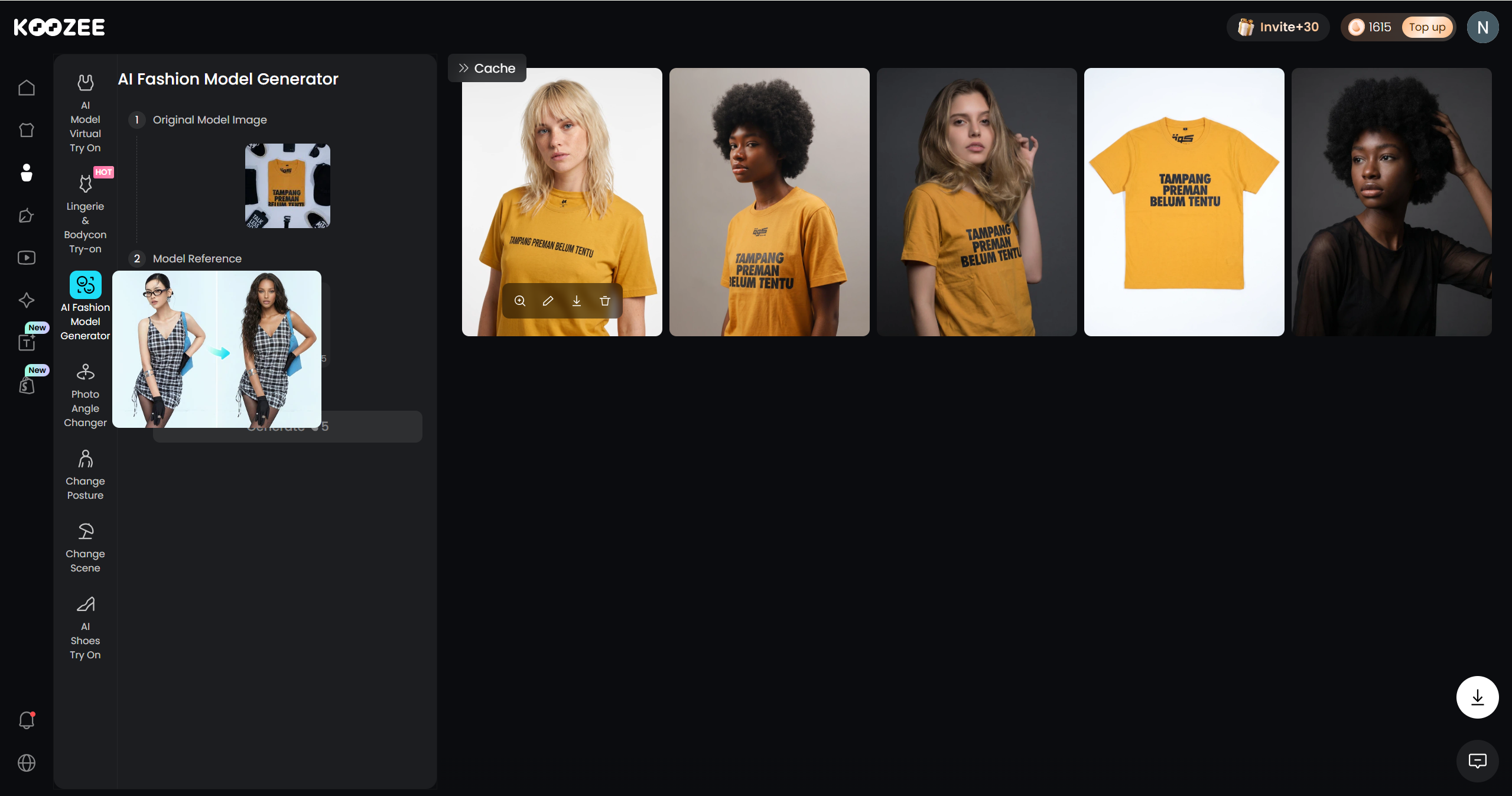
Koozee is one of them. Rather than arranging separate photoshoots in Europe, Asia, or the US, sellers can use Koozee to automatically generate on-model clothing visuals featuring diverse local models (varying skin tones, ethnicities, and even posture, background) from a single base product image.
Zero-Shoot Model Localization: Generate diverse model try-ons and localized lifestyle scenes from existing product photos.
Create market-specific campaign visuals for local holidays and seasonal events using AI-generated imagery.
Produce commercial-grade assets for Amazon, and other marketplaces at scale.
Connected Shopify workspace: Generate localized visual suites, preview, and publish approved assets directly back to your store without a messy download-and-upload cycle.
5: Localize Pricing, Currency, and Payment Methods
How to localize payments and pricing:
Display prices in local currency: Use a currency converter that updates in real time, and show the local currency by default based on the visitor's location — not as an opt-in.
Show total landed cost upfront: Include local taxes, duties, and shipping costs in the displayed price. Hidden costs at checkout are the #1 cause of cart abandonment globally.
Integrate local payment methods: Research the dominant payment methods in your target market:
Germany: PayPal, Klarna (invoice), SEPA direct debit
Netherlands: iDEAL
Brazil: Boleto Bancário, Pix
China: Alipay, WeChat Pay
Southeast Asia: GrabPay, GoPay, local digital wallets
India: UPI, Paytm
Consider local buy-now-pay-later (BNPL) options: BNPL adoption varies significantly by market and can meaningfully increase average order value for apparel.
⚠️ Warning: Payment method integration requires compliance with local financial regulations. Work with a payment provider (Stripe, Adyen, or a local gateway) that handles regulatory compliance for your target markets rather than building custom integrations.
Best for: Sellers in markets where credit card penetration is low or where local payment methods dominate checkout behavior.
6: Implement Multilingual SEO
A localized store that isn't discoverable in local search results misses the primary acquisition channel for most ecommerce businesses.
How to implement multilingual SEO:
Choose your URL structure: Three options — subdomains (
de.yourstore.com), subdirectories (yourstore.com/de/), or ccTLDs (yourstore.de). Subdirectories are generally recommended for most sellers as they consolidate domain authority while signaling local relevance.Implement hreflang tags: These tell Google which version of your page to show to users in each language/region. Incorrect hreflang implementation is one of the most common technical SEO errors in international ecommerce.
Conduct keyword research in the target language: Do not translate your English keywords directly. Search behavior differs by language — the terms your German customers use to find clothing are not literal translations of your English keywords.
Localize meta titles and descriptions: These should be written natively in the target language, not translated from English versions.
Build local backlinks: Domain authority in local search is partly driven by links from local publications, directories, and industry sites. A German fashion blog linking to your German store page carries more local SEO weight than an English-language link.
📌 Note: For Shopify sellers, the Shopify Markets feature handles much of the technical infrastructure for multilingual SEO, including URL structure and hreflang implementation.
Best for: Sellers targeting markets where organic search is a primary acquisition channel and where local-language search volume is significant.
7: Localize Customer Service and Post-Purchase Experience
How to localize customer service:
Offer support in the local language: At minimum, provide localized FAQ pages and return policy documentation. For high-volume markets, consider native-language support agents or AI-assisted translation for support tickets.
Adapt your return policy to local regulations: EU consumers have a statutory 14-day right of return. Other markets have different requirements. Your return policy must comply with local consumer protection law.
Localize shipping and delivery communications: Order confirmation emails, shipping notifications, and delivery updates should be in the customer's language.
Adapt review and UGC collection: Request reviews in the customer's language. Localized reviews are more trusted by local shoppers and contribute to local SEO.
8: Measure, Iterate, and Expand
Localization is not a one-time project. It's an ongoing process of measurement and optimization.
Key metrics to track by market:
| Metric | What It Tells You |
| Conversion rate by country | Whether localization is closing the gap with your home market |
| Return rate by country | Whether sizing and fit localization is working |
| Cart abandonment rate | Whether payment and pricing localization is reducing checkout friction |
| Organic traffic by language | Whether multilingual SEO is generating local search visibility |
| Customer support ticket volume | Whether content localization is reducing confusion |
Review these metrics monthly for the first six months after launching a localized market. Identify the highest-friction points and address them before expanding to additional markets.
Ecommerce Localization vs. Translation
While we've covered this conceptually, here is the technical breakdown of why translation alone fails apparel sellers:
| Dimension | Translation | Localization |
| Scope | Language only | Language + culture + UX + payments + visuals + SEO + legal |
| Output | Translated text | A store that feels native to the target market |
| Sizing | Not addressed | Size charts converted to local standards |
| Visuals | Not addressed | Models, imagery, and styling adapted for local market |
| Payments | Not addressed | Local payment methods integrated |
| SEO | Not addressed | Keywords researched in target language; hreflang implemented |
| Legal | Not addressed | Local consumer protection law and labeling requirements met |
| Cost | Lower | Higher — but higher ROI |
In short: Translation removes the language barrier; Localization removes the trust barrier.
FAQs about Localization in E-commerce
What is ecommerce localization? Ecommerce localization is the process of adapting an online store to meet the linguistic, cultural, legal, and behavioral expectations of a specific target market. It goes beyond translation to include sizing standards, payment methods, visual content, SEO, and regulatory compliance — so that the shopping experience feels native to customers in that region.
What is the biggest visual localization challenge for apparel sellers? One of the biggest challenges is cost. Arranging market-specific photoshoots with local models for every target market is expensive and logistically complex. AI visual production tools like Koozee allow sellers to generate diverse on-model imagery from existing product photos, without a global photoshoot budget.
How long does ecommerce localization take? A full localization of one market — including translation, sizing adaptation, payment integration, visual updates, and SEO implementation — typically months depending on catalog size and internal resources.
Do I need to localize my Shopify store differently than other platforms? Shopify's Markets feature provides built-in infrastructure for international selling, including currency conversion, local payment methods, and URL structure for multilingual SEO. It simplifies the technical implementation significantly compared to building custom localization on other platforms.
You May Be Interested

Amazon Product Photo Requirements 2026: Compliance & Best Practices

6 Best Plus Size AI Model Generators for Apparel Sellers

Top 10 Virtual Try-on Apps for Shopify (2026)