9 Best Bodysuit AI On-Model Photography Generators for Apparel Sellers


Choosing the right bodysuit AI on-model photography generator is less about producing a single attractive image and more about building a visual workflow that can keep pace with modern apparel selling. Bodysuits are especially demanding because they need an accurate fit, clean fabric rendering, and a realistic on-body presentation that still feels polished enough for product pages, ads, and social content. Generic AI tools often struggle with these details, which makes category-specific platforms much more useful for brands that want dependable, conversion-ready visuals.
In this guide, we break down the leading AI on-model generators for bodysuits so you can compare their strengths across realism, workflow efficiency, platform compatibility, and commercial use cases. Whether you are optimizing a Shopify store, scaling a large catalog, or creating varied assets for intimate apparel campaigns, this article will help you identify the right tool for your brand’s visual strategy.
You may also like: How to reduce e-commerce return rate
Key Takeaways
Slash Production Costs: Transitioning to an AI workflow reduces the need for expensive studios, professional photographers, and live models.
Solve the Fitted Apparel Problem: Specialized tools successfully handle the complex fabric drape and shape of bodysuits and intimate wear without triggering adult-content safety filters.
Seamless E-commerce Integration: The top platforms connect directly to your e-commerce store or marketplace storefronts for rapid publishing.
Boost Catalog Consistency: AI generators allow you to maintain a unified brand identity by reusing the same digital models across hundreds of SKUs.
Unlock Video Marketing: Several advanced platforms (Koozee, Botika) now offer dynamic video generation, turning static bodysuit images into viral, short-form video clips.
How We Tested These Bodysuit AI On-Model Photography Generators
To determine the true capabilities of these platforms, we established a testing framework that mirrors the real-world operational workflows of apparel sellers.
First, we evaluated Input Versatility. We uploaded various standard product images—ranging from flat-lays to ghost mannequins—to see how each tool handled generating a realistic on-model visual.
Second, we strictly analyzed Fabric and Fit Accuracy. Because fitted garments are difficult for AI to process, we paid close attention to how well each tool rendered the drape, stretch, and structural integrity of bodysuits and intimate apparel. Tools that overly smoothed out fabrics or triggered unnecessary safety content blocks lost points in our assessment.
Finally, we looked at E-commerce Utility. A tool is only as good as its integration into your sales funnel, so we prioritized platforms offering direct store integrations, high-resolution outputs, and consistent model identity retention. This testing method ensures our recommendations are rooted in actual e-commerce value rather than just flashy, surface-level AI features.
Quick Comparison Table
| Tool | Best For | Pricing | Model Diversity | Shopify Integration | Video |
| Botika | Polished on-model photos + video | From $22/mo | ✅ Multiple ethnicities | ✅ Native | ✅ |
| Koozee | Full apparel visual workflow | From $22.9/mo | ✅ Multiple models | ✅ Native Shopify app | ✅ Multiple formats |
| Rawshot.ai | Creative directors needing strict control over lighting and pose. | From $9/mo | ✅ Extensive | ✅ Native | ✅ |
| OnModel | Shopify-native model generation | From $9/mo | ✅ Diverse models | ✅ Native | ❌ |
| VModel | Budget-friendly + pay-as-you-go | Pay per use | ✅ Multiple types | ❌ | ❌ |
| WeShop AI | Batch generation + 4K output | From $9.99/mo | ✅ Diverse | ❌ | ✅ |
| Claid | PDP-ready e-commerce images | From $15/mo | ✅ Multiple | ❌ | ❌ |
| WearView | Catalog consistency | From $29/mo | ✅ Consistent identity | ❌ | ❌ |
| RenderShorts | Pose control + catalog automation | From $19/mo | ✅ Model maker | ❌ | ✅ |
1. Botika — Best Overall AI Fashion Model Generator
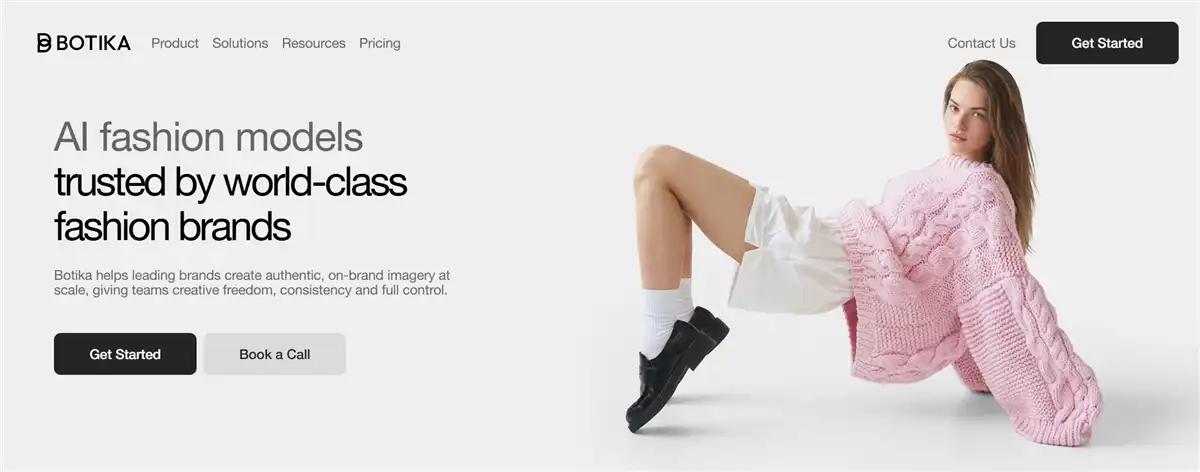
Botika is one of the most recommended bodysuit AI generators that transform flat-lay, ghost mannequin, or hanger product images into on-model fashion photos and short videos. It's built specifically for e-commerce clothing brands that want to cut costs on traditional photoshoots without sacrificing output quality. Moreover, for apparel brands that need a steady stream of catalog-ready imagery for their latest collections, this tool offers rapid turnarounds.
For bodysuit sellers, Botika's strength is its garment preservation — the AI accurately renders how fitted apparel sits on different body types, maintaining seam lines, fabric texture, and proportional accuracy better than most general-purpose alternatives.
Standout Feature: Human-in-the-loop review workflow combined with diverse AI model generation for brand consistency.
Pros:
A wide variety of ethnicities and body types.
Excellent flat-lay to on-model transformations.
Combines AI with human QA and retouching for safe, scalable catalog publishing.
Shopify integration for direct catalog workflows.
Cons:
No custom model or background uploads are currently supported.
Credit costs add up quickly for full seasonal catalogs.
Best for: Apparel retailers requiring strict quality assurance and diverse catalog representation.
2. Koozee — Best Full Apparel Visual Workflow
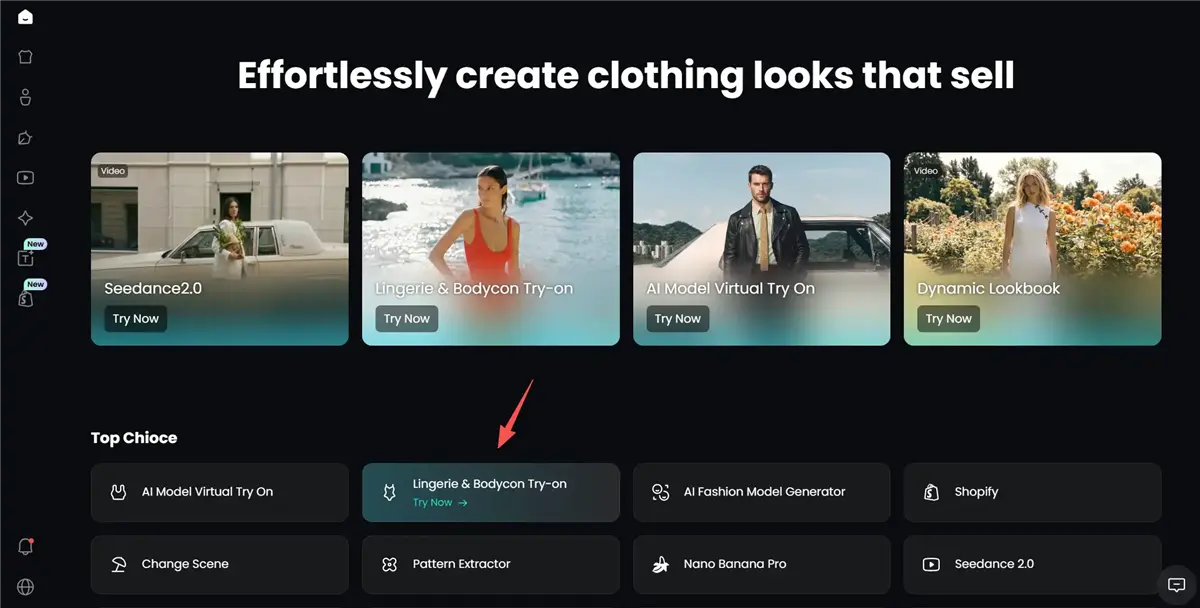
Koozee is built for brands that want more than basic image generation and need a broader apparel visual system. It combines AI try-on, model generation, product videos, viral video cloning, and Shopify publishing in one workspace, which makes it particularly useful for bodysuit and intimate apparel sellers working across multiple content formats.
Instead of treating product imagery as a single output, Koozee helps brands build a full visual package around each item. That means you can create on-model photos, turn them into motion content, and prepare listing assets within the same workflow. Its relevance for fitted apparel comes from its category-specific support for lingerie, swimwear, and bodycon try-ons, which helps it align better with the visual needs of brands selling close-fitting garments.
Standout Feature: Comprehensive Shopify-connected workspace tailored for apparel e-commerce, with specialized capabilities for intimate and fitted clothing.
Pros:
Creates highly realistic lingerie and bodysuit try-on visuals without safety-filter over-blocking.
AI model and scene changes for diverse visual variations.
Seamlessly syncs with Shopify to reuse, preview, and publish product listings directly.
Supports dynamic product videos and viral video cloning to enhance marketing campaigns.
Cons:
Output quality varies with garment complexity.
Lacks bulk image generation for high demand.
Best for: Apparel sellers who need more than just on-model photos — brands that want try-ons, videos, listing assets, and Shopify publishing in one workflow.
You may also like: Botika AI vs. Koozee
3. Rawshot.ai — Best for Large Catalogs and API Workflows
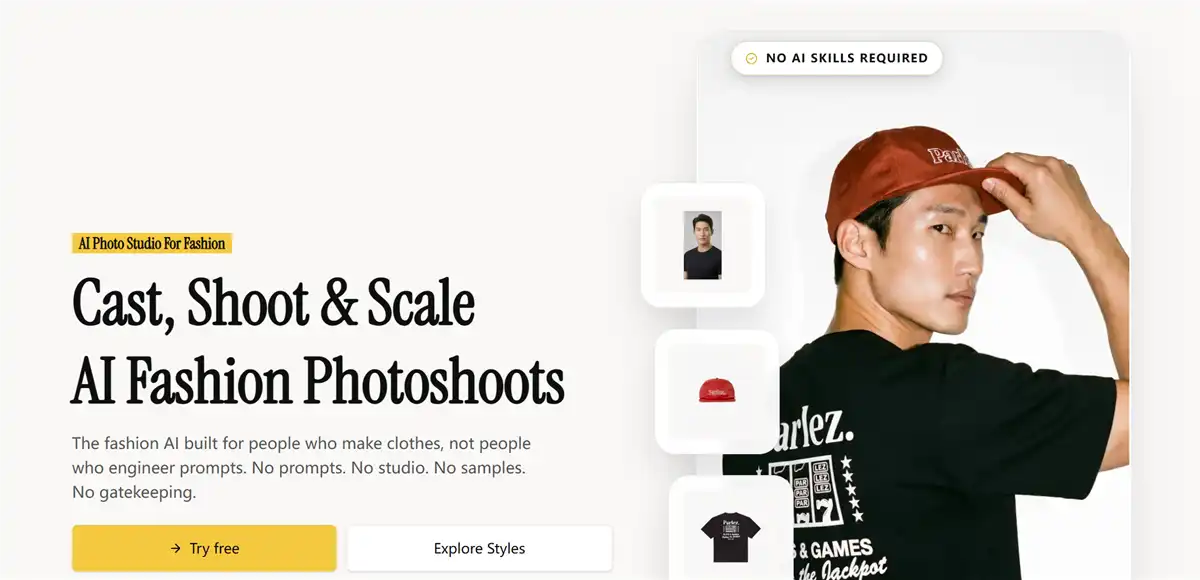
Rawshot.ai is a robust AI image and video generator tailored explicitly for fashion teams who prefer a directorial approach rather than complex prompt engineering. Its interface relies heavily on clicks, sliders, and intuitive controls, removing the text-prompt barrier that often complicates AI generation. What makes Rawshot best for bodysuits is that it maintains absolute garment fidelity, ensuring that the cut, color, pattern, logo, fabric, and drape are perfectly preserved from the source product to the final shoot.
Additionally, it supports synthetic composite models that maintain a consistent identity across hundreds of SKUs, effectively eliminating the uncanny drift often seen in basic AI tools. With built-in compliance features like C2PA signing, multi-layer watermarking, and AI labeling on every 2K or 4K image, it is a highly secure and scalable option for enterprise-level catalog production.
Standout Feature: Click-driven interface that replaces complex text prompting with direct camera and lighting controls.
Pros:
Delivers consistent model appearances across various bodysuit styles.
Unmatched garment fidelity preserving cuts, logos, and fabric drape.
Provides full commercial rights with C2PA metadata compliance.
Cons:
Final image quality depends heavily on the source photos.
Predefined poses restrict creative freedom for abstract editorial shoots.
Credit-based pricing can quickly escalate during heavy batch processing.
Best For: Professional fashion marketing teams needing strict directorial control and compliance.
4. OnModel — Best Shopify-Native Fashion Model Tool
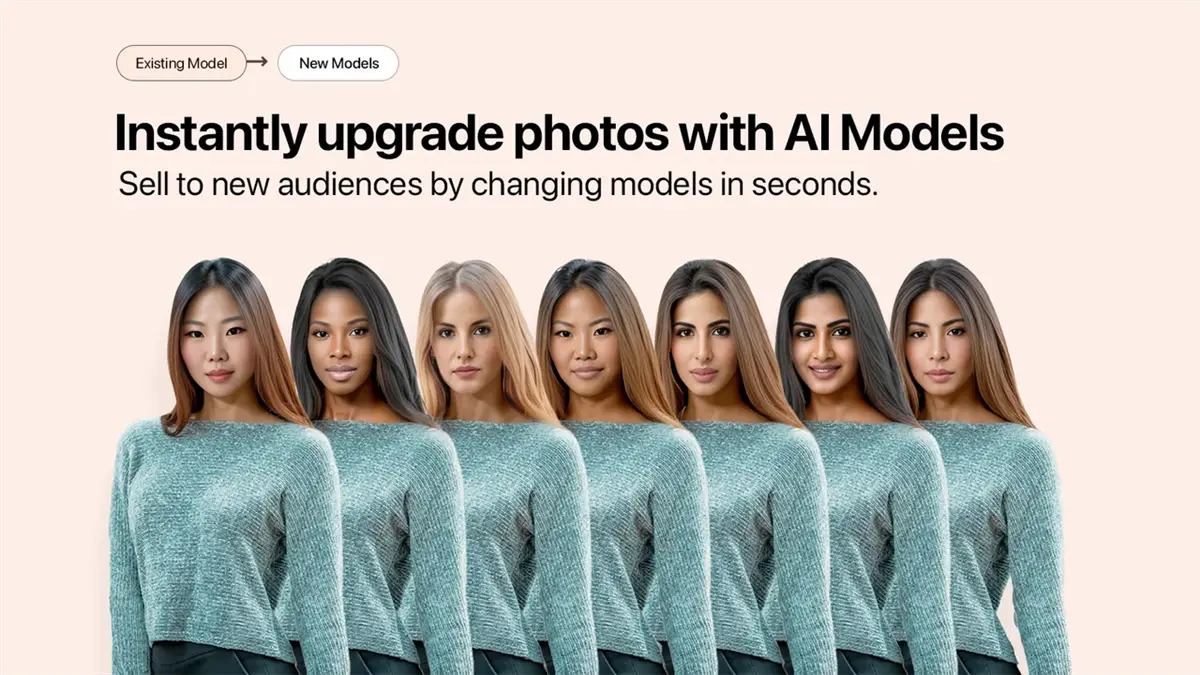
OnModel is a Shopify-first AI fashion model app that generates photorealistic model images directly from your store's product catalog. It leverages artificial intelligence to rapidly modify and enhance product images, allowing e-commerce businesses to swap models in existing photos with a simple click. This rapid model-swapping feature is particularly valuable for keeping store aesthetics fresh and relatable to diverse target demographics without the need for constant reshoots.
The tool also provides automatic face generation for headless cropped images and one-click background adjustments to align with specific marketing campaigns. For larger bodysuit enterprises, it offers batch processing capabilities that can handle thousands of images simultaneously, ensuring visual consistency across massive product catalogs while significantly reducing operational bottlenecks and manual editing time.
Standout Feature: Native Shopify app integration offering automated one-click model swapping and face generation.
Pros:
Instant on-model generation from product images.
Excellent at generating faces for cropped or headless images.
Batch processing saves hours of manual work.
Cons:
Lacks broader video generation or extensive lifestyle scene creation tools.
Complex fabric textures can appear artificial in some generations.
No video generation.
Best for: Small to medium Shopify stores looking to quickly upgrade their existing product catalogs.
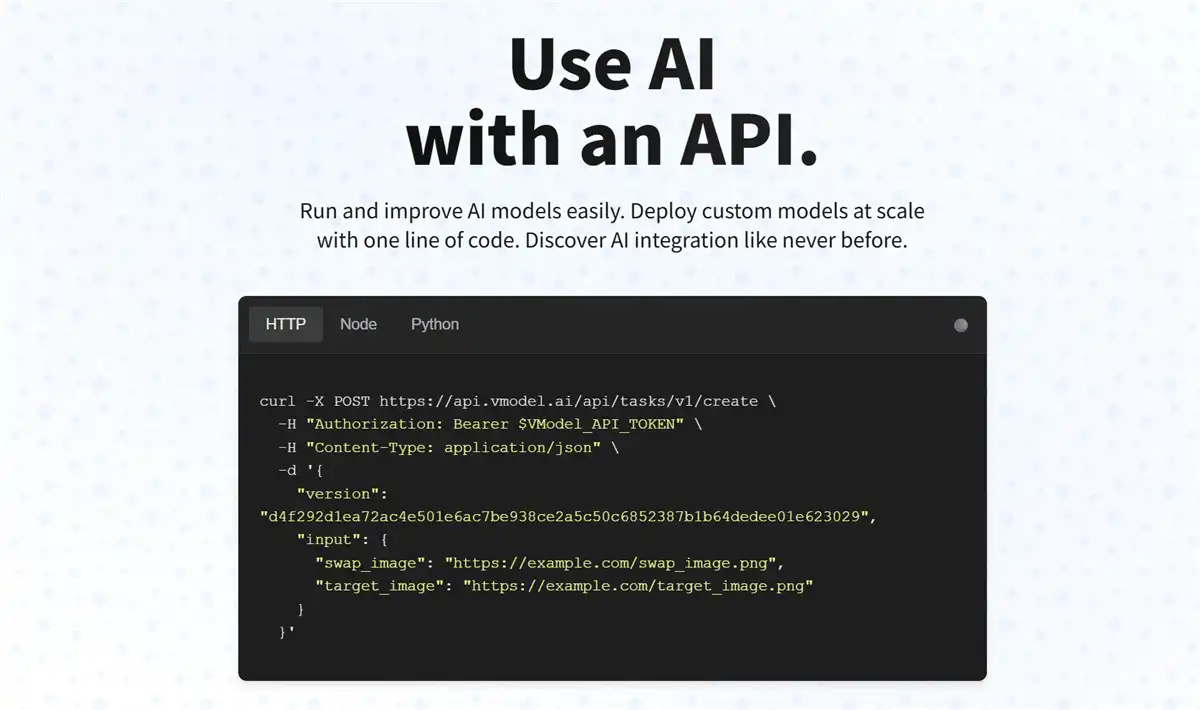
5. VModel — Best Budget-Friendly Pay-As-You-Go Option
VModel stands out as an efficient and highly cost-effective AI fashion model generator explicitly crafted to empower e-commerce retailers. Its pay-as-you-go credit system means you only pay for what you use — ideal for bodysuit sellers testing AI model photography for the first time or running small, seasonal catalogs. By utilizing advanced AI algorithms, it directly connects clothing to digital models, providing a realistic look that helps potential buyers visualize the fit and style of the garments.
Despite its lower price point, VModel includes face swap, AI object replacement, background generation, and batch processing. The API-first architecture also makes it a fit for sellers who want to build custom workflows without enterprise price tags.
Standout Feature: Extremely cost-effective generation engine designed to slash traditional model photography budgets by up to 90%.
Pros:
Highly affordable for smaller retailers.
Fast rendering times for basic on-model imagery.
Simplifies the complex visual creation pipeline.
Cons:
May lack the advanced directorial and lighting controls of enterprise platforms.
Fewer workflow options than all-in-one platforms.
No Shopify integration.
Best for: Individual bodysuit sellers and small brands testing AI model photography with low or unpredictable volume.
6. WeShop AI — Best for Batch Generation and 4K Output
WeShop AI is an AI visual creation platform for e-commerce that balances versatility with affordability. Its batch image generation workflows and 4K upscaling make it a practical choice for bodysuit sellers who need high-resolution catalog images across multiple colorways and angles. The platform's scene and template library offers flexibility that more fashion-only tools don't — you can generate on-model bodysuit images, then use the same tool to create lifestyle backgrounds, social media visuals, and marketing banners.
With the ability to create versatile indoor and outdoor scenes instantly, it provides fashion retailers with the creative flexibility needed to produce compelling bodysuit showcases without draining their production budgets.
Standout Feature: An expansive library of over 200 diverse AI models combined with powerful face-swapping technology.
Pros:
Unlimited realistic model generation across multiple demographics.
Allows users to maintain brand consistency by reusing specific model faces.
Generates versatile indoor and outdoor scenes instantly.
Cons:
Less precision for intricate apparel seams and sheer fabrics.
Less fashion-specialized than dedicated apparel tools.
Limited creative control for specific lighting and angles.
Best for: General e-commerce sellers who want flexible background options alongside on-model generation, and teams that need to scale visual content production efficiently.
Also read: Best Weshop AI alternatives 2026
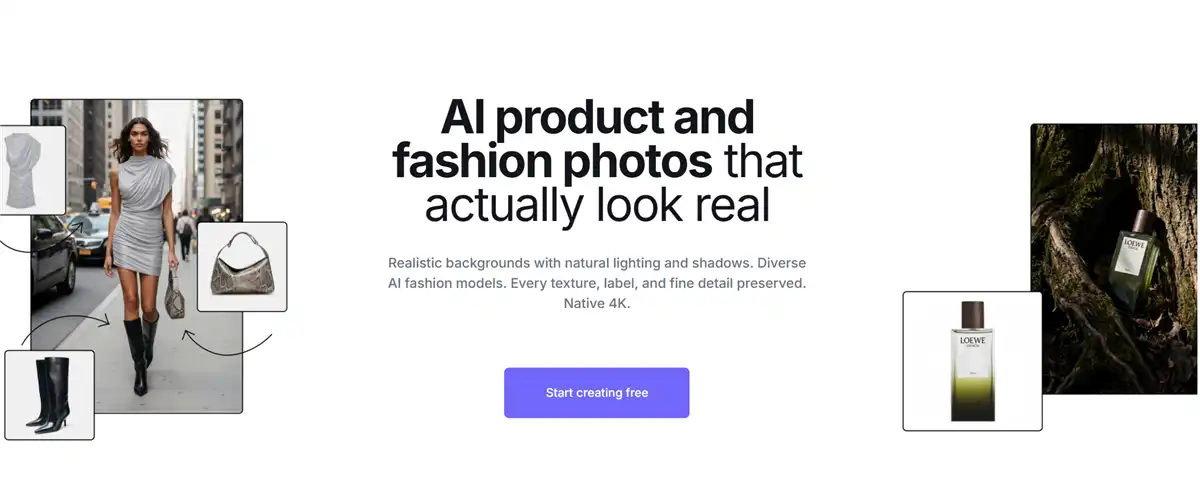
7. Claid — Best for PDP-Ready E-Commerce Images
Claid is built specifically for e-commerce product detail pages on the bodysuit AI on-model photography generator list. Its AI fashion suite generates on-model images from flat-lays and is optimized for marketplace listing requirements that meet Amazon, Shopify, and eBay standards. For bodysuit sellers listing across multiple marketplaces, Claid's focus on product preservation and catalog consistency reduces the back-and-forth of reformatting images for different platform requirements.
Beyond its powerful mannequin-to-model conversion capabilities, it is renowned for its premium AI enhancement features that boost image quality and resolution to pristine 4K, ensuring photos look sharp on any screen size. This makes it an all-encompassing solution for creating, scaling, and perfecting professional on-model shots for product pages, ads, and lookbooks.
Standout Feature: Industry-leading AI upscaling and enhancement combined with precision mannequin-to-model conversions.
Pros:
Generates incredibly sharp 4K resolution images.
Flexible text-prompt support for highly specific lifestyle scenes.
Allows for custom model likeness uploads.
Cons:
Requires well-lit, high-quality input photos for the best generation results.
Custom pricing means no transparent self-serve entry point.
Less community and tutorial content compared to more widely used tools.
Best for: Multi-marketplace bodysuit sellers who need listing-compliant on-model images across Amazon, Shopify, eBay, and other channels.
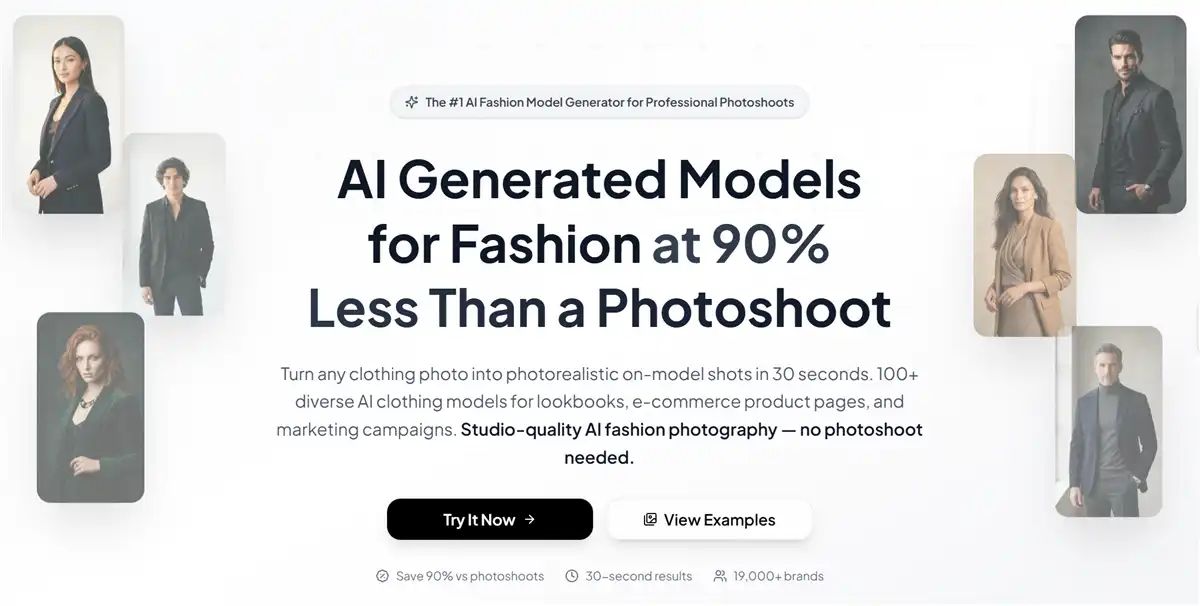
8. WearView — Best for Catalog Consistency
WearView is a specialized AI fashion photography platform that converts flat-lays, ghost mannequin shots, and standard packshots into scalable on-model product imagery. Its standout feature is consistent model identity across the entire catalog — you define a model once, and every bodysuit in your collection gets photographed on that same person. This consistency is especially valuable for bodysuit brands, where shoppers compare multiple products and expect to see them on the same body type for accurate fit comparison.
While it excels in static photography generation, WearView also offers basic AI video capabilities, allowing users to generate short fashion videos from static images. By drastically speeding up time-to-market for new collections, it serves as a reliable workhorse for fashion retailers looking to modernize their visual content pipelines and reduce overarching production costs.
Standout Feature: Strong focus on maintaining consistent model identity across diverse e-commerce product catalogs.
Pros:
Allows pose control through reference image uploads.
Photorealistic output optimized for e-commerce.
Offers basic AI video generation capabilities.
Cons:
The subscription price is higher than that of most competitors.
Ghost mannequin features are locked behind higher-tier, expensive plans.
Best for: Scaling bodysuit brands that prioritize visual consistency across their product listings.
9. RenderShorts — Best for Pose Control and Catalog Automation
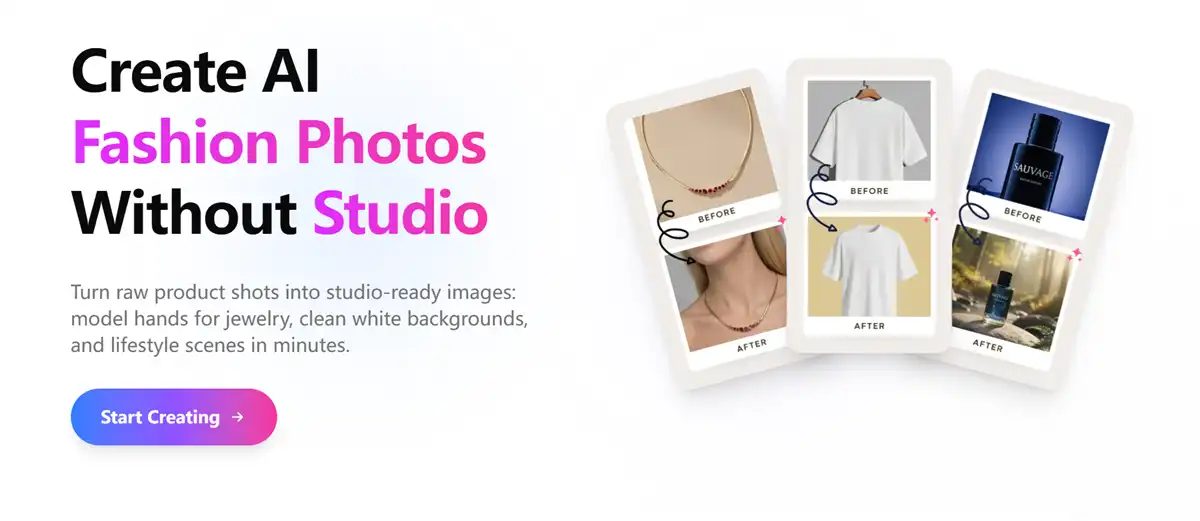
RenderShorts steps into the AI fashion space with a strong emphasis on generating dynamic photos specifically tailored for modern social commerce and digital marketing. While many AI tools focus purely on static on-model photography, this platform takes generated fashion visuals and creates fluid, eye-catching video shorts ideal for platforms like TikTok, Instagram Reels, and YouTube Shorts.
For bodysuit sellers who need to show garments in dynamic, active poses (yoga wear, dance, fitness), RenderShorts' pose control gives you creative flexibility that many competitors lack. Instead of accepting whatever pose the AI generates, you direct how the model stands, moves, and presents the garment.
Standout Feature: Specialized algorithms that transform static fashion imagery into dynamic, short-form video content tailored for social media.
Pros:
Delivers high-quality, realistic on-model images for bodysuits.
Offers diverse AI models to showcase different body types.
Reduces clothing photography and studio production costs significantly.
Creates natural fabric movement and fluid model animations.
Cons:
May struggle with complex fabric textures or intricate patterns.
Requires high-resolution source images for accurate rendering results.
Offers limited manual control over specific lighting or fine details.
Best for: Activewear and bodysuit brands that need dynamic pose variety and cost-effective catalog automation at scale.
How to Choose the Right AI Model Generator for Your Bodysuit Brand
With nine solid options, the right choice depends on where you are and where you're going:
If you're a Shopify-first bodysuit brand looking for the simplest path from product image to listing: start with Koozee or OnModel. Both platforms are integrated with Shopify.
If you need more than just on-model photos — videos, listing pages, campaign assets — and want one platform instead of multiple subscriptions: look for a full-workflow platform like Koozee that covers try-on, video generation, listing assets, and marketplace publishing in a single tool.
If you manage hundreds of bodysuit SKUs across seasons and need programmatic access: Rawshot.ai or Claid gives you the batch processing and API infrastructure you'll need.
If you're budget-conscious and hope to test before subscribing: VModel's pay-as-you-go model and WeShop AI's free tier let you experiment without commitment.
If catalog-wide model consistency is prioritized: WearView or RenderShorts' model maker features are purpose-built for that.
⚠️ Important: No AI on-model generator is perfect for every bodysuit. Fabrics with complex patterns, sheer panels, or unusual cuts may require more attempts. Always spot-check a sample of your catalog before committing to a bulk workflow.
Conclusion
Choosing the right AI on-model photography generator for your bodysuit store is a strategic move that can completely transform how your apparel brand operates online. Traditional photoshoots are no longer the only path to high-quality, conversion-driving product listings. By leveraging the advanced tools highlighted in this guide—from Koozee's Shopify-integrated intimate apparel workflows to the directorial precision of Rawshot.ai—you can slash your production costs and accelerate your time-to-market. Whether you are generating static 4K visuals, swapping models for diverse audiences, or creating dynamic video lookbooks, the best bodysuite AI model photography generator for your business is the one that seamlessly integrates with your existing catalog and scales alongside your brand's ambitions.
FAQ: Bodysuit AI On-Model Photography Generators
What is an AI bodysuit on-model photography generator?
It's a tool that uses artificial intelligence to place bodysuits onto digital human models. You upload a flat-lay, hanger, or mannequin photo of your bodysuit, and the AI generates photorealistic images of the garment worn by a model in various poses and settings.
How much does AI on-model bodysuit photography cost compared to traditional photoshoots?
Traditional bodysuit photoshoots typically cost $500–$5,000+ per session, depending on the number of models, outfits, and locations. AI generators start from $15–$22/month for small volumes, with per-image costs ranging from roughly $0.10 to $1.00 depending on the tool and plan.
Can AI on-model generators handle stretch fabrics and fitted silhouettes accurately?
It depends on the tool. General-purpose AI image generators often struggle with how spandex and nylon-blend bodysuits stretch, drape, and contour across different body shapes. Tools built specifically for apparel — like Botika and Koozee — perform better because their models are trained on fashion imagery.
Are AI-generated bodysuit model images allowed on Amazon and Shopify?
Yes. Both Amazon and Shopify permit AI-generated product images, provided they accurately represent the product being sold. The key requirement is that the image must not mislead customers about what they'll receive, or you will risk returns and policy violations.
Do I need a Shopify-specific AI model generator?
Not necessarily — but it helps. Shopify-native tools like Koozee and OnModel eliminate the download-edit-upload loop by connecting directly to your product catalog. If you're listing on multiple marketplaces (Amazon, eBay, TikTok Shop), a platform-agnostic tool like WeShop AI can also offer flexibility.
Is there a free AI bodysuit on-model photography generator?
Several tools offer free tiers: Koozee gives 30 free credits for new users, VModel has a free tier with limited generations, WeShop AI offers a 200-point free plan, and OnModel has a free plan to start. These free tiers are good for testing but can be limited for full catalog production.
How many images should I generate per bodysuit product?
Aim for 5 to 8 images per bodysuit product. Maximize buyer confidence by including a front on-model shot, back view, side angle, close-up fabric detail, and one lifestyle image.
You May Be Interested

Best AI Face Swap Video Generators for Apparel Sellers

9 Best AI Fashion Model Generators for E-commerce (2026)
7 Best AI Try-On Clothes Tools in 2026