Top 8 AI Virtual Try-on Tools for Underwear Sellers 2026


Creating high-converting underwear and lingerie product visuals is harder than it looks. Unlike standard apparel, intimate wear depends on details like fit, drape, fabric transparency, lace patterns, and body presentation — all of which can be difficult to capture with traditional photoshoots or generic AI image tools.
That is where underwear AI virtual try-on tools can help. These platforms turn flat-lay, mannequin, or product images into realistic on-model visuals, making it easier for e-commerce sellers to create listing-ready content without repeated studio shoots. In this guide, we review the best underwear AI virtual try-on tools for brands that want faster production, better product presentation, and more conversion-friendly visuals.
You may also like: Best virtual try-on apps for swimwear
Key Takeaways
Top pick for full workflow: Koozee is the best AI virtual try-on tool for apparel sellers who need try-on visuals, product videos, and Shopify listing assets in one platform.
Best for pure lingerie try-on: PhotoGPT offers an AI lingerie generator for creating product-to-model visuals with exceptional fabric rendering for lace, silk, and sheer materials.
Best free option: Kaze AI offers a genuinely free, no-signup virtual lingerie try-on tool that delivers photorealistic results.
Best enterprise solution: Vue.ai provides fashion virtual-dressing-room technology with support for model diversity and enterprise integration.
What to look for: The most important factors when choosing an underwear AI try-on tool are fabric rendering accuracy, model diversity, e-commerce platform integration, and commercial usage rights.
Why Underwear AI Virtual Try-on Matters for E-Commerce Sellers
Intimate-apparel shoppers may need clear information about design, construction, fabric, coverage, and sizing. Because shoppers generally cannot physically try on online purchases, uncertainty about fit can affect purchase decisions and returns.
Here's what AI virtual try-on changes for underwear sellers:
Traditional lingerie photoshoots are expensive — models, studios, photographers, and editors add up fast. AI try-on generates on-model visuals from product photos alone.
AI tools may shorten the visual-production stage for new SKUs, depending on review, correction, and marketplace requirements.
Reduce return rates. When customers see realistic on-model visuals showing fit and fabric drape, they make better purchase decisions.
Generate multiple model variations from a product image, subject to the tool’s model controls and output quality.
AI production may reduce some photography requirements, but traditional photography remains useful for accurate color, construction, fit, and compliance.
Quick Comparison Table
| Tool | Best For | Pricing Model | Standout Feature | E-Commerce Integration |
| Koozee | Full lingerie/underwear workflow (try-on + video + listings) | Free credits; subscription plan or credit-based | Shopify sync + video + listing assets | Downloadable outputs, Shopify |
| PhotoGPT | Pure lingerie try-on quality | Subscription plan | Studio-grade fabric rendering | Downloadable outputs |
| Botika | Realistic model generation | Subscription plan | Diffusion-based high-fidelity output | Shopify, API |
| Fashion Diffusion | AI fashion design + try-on | Subscription plan | Model customization + text prompts | Commercial downloads |
| Vue.ai | Enterprise fashion retail | Custom/enterprise | Comprehensive AI suite + API | API, platform integration |
| TinTin | Flat-lay to model conversion | Free tier; subscription plan | Lace and mesh detail preservation | Commercial downloads |
| WearView | Swimwear & lingerie photography | Subscription plan | Garment-accurate high-res photos | Commercial downloads |
| Kaze AI | Free quick try-on visuals | Free credits; subscription plan | No-signup instant results | Downloadable outputs, API |
1. Koozee — Best Full Workflow for Apparel E-Commerce Sellers
Koozee is a full AI visual production platform built for apparel sellers that need more than a single try-on feature. For underwear and lingerie brands, it offers a practical way to generate on-model visuals, product videos, and storefront-ready assets in one workflow, with support for intimate apparel categories that many general AI tools struggle to handle.
The platform also supports different model types, poses, and scenes, which helps brands create diverse, conversion-friendly visuals without repeated studio shoots. With built-in Shopify integration, Koozee is especially useful for teams that want to move from product photos to published listings quickly while maintaining a consistent visual identity across their catalog.
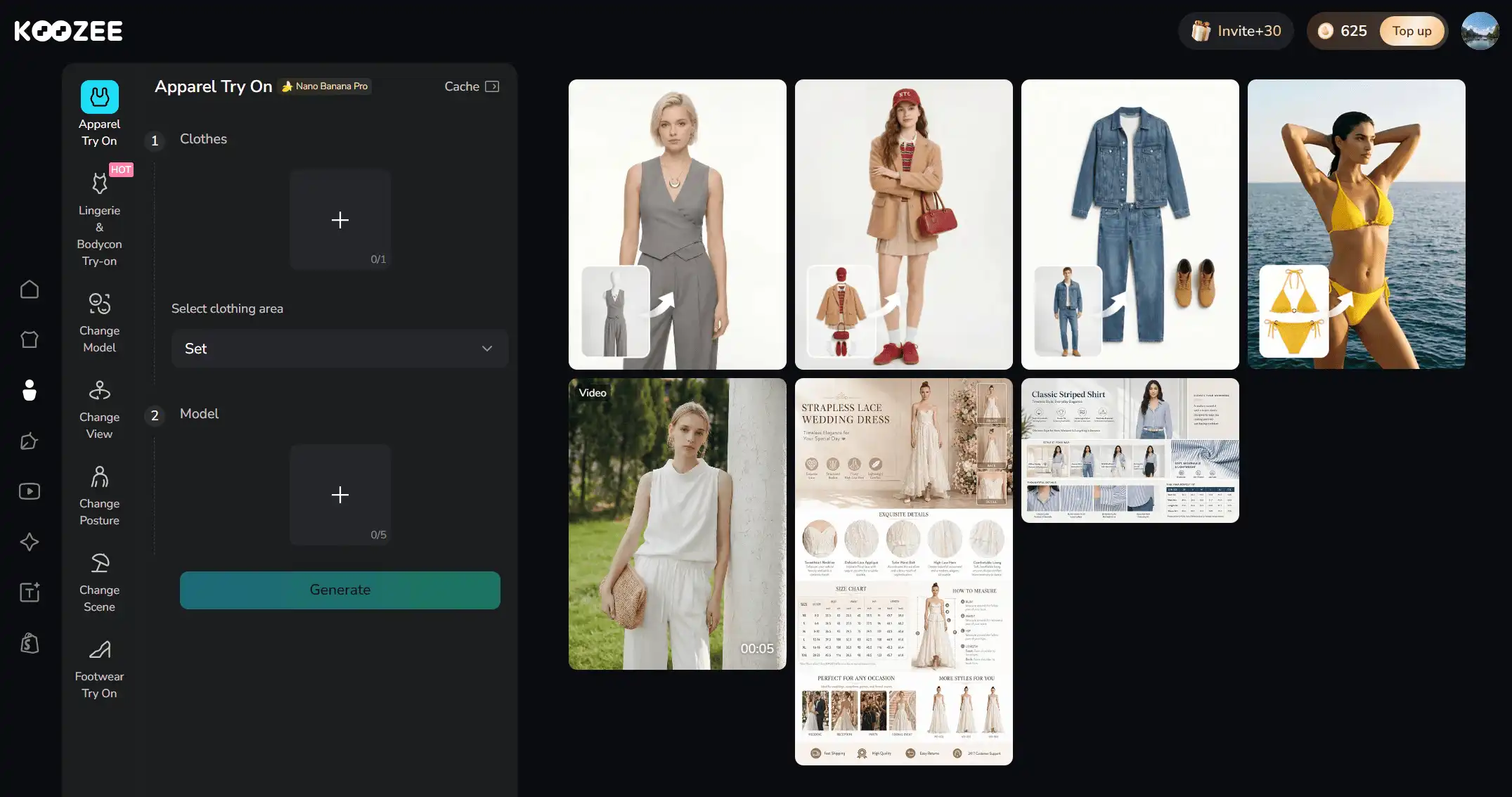
Key features:
Lingerie, swimwear, and bodycon try-on that bypasses generic AI restrictions.
Product image tools: main images, detail shots, flat lays, ghost mannequin replacements.
Change model, scene, and posture within the same workflow.
Apparel video generation (lookbooks, viral video clones, fit checks).
Shopify integration: connect, generate, review, and publish approved assets to Shopify directly.
Pricing Model: Free credits are available for new users (30 credits to start); subscription plans and credit-based sales are available too.
Best for: Apparel sellers who need a single platform for try-on, video, and listing assets — especially those selling lingerie, swimwear, or fitted clothing categories where traditional photoshoots are most expensive.
Limitations: Output quality depends on input image quality. Video features are more limited than dedicated video tools.
2. PhotoGPT — Best for Studio-Quality Lingerie Visuals
PhotoGPT is a strong choice for lingerie and underwear brands that want polished, studio-style on-model visuals. Its lingerie-focused generation workflow makes it especially useful for preserving delicate fabric details such as lace, silk, satin, and sheer materials while keeping the final output visually refined. For sellers who need to show fit, drape, and construction clearly, PhotoGPT’s fabric rendering helps reduce uncertainty for shoppers and supports more confident purchase decisions.
The tool also allows brands to experiment with different model types, lighting setups, and editorial-style compositions, which is valuable for creating campaign-ready images without booking a full photoshoot. Beyond static images, PhotoGPT supports short try-on and haul-style clips that work well for social ads and product teasers. This makes it a practical option for brands that want high-quality visuals for both product pages and social commerce.
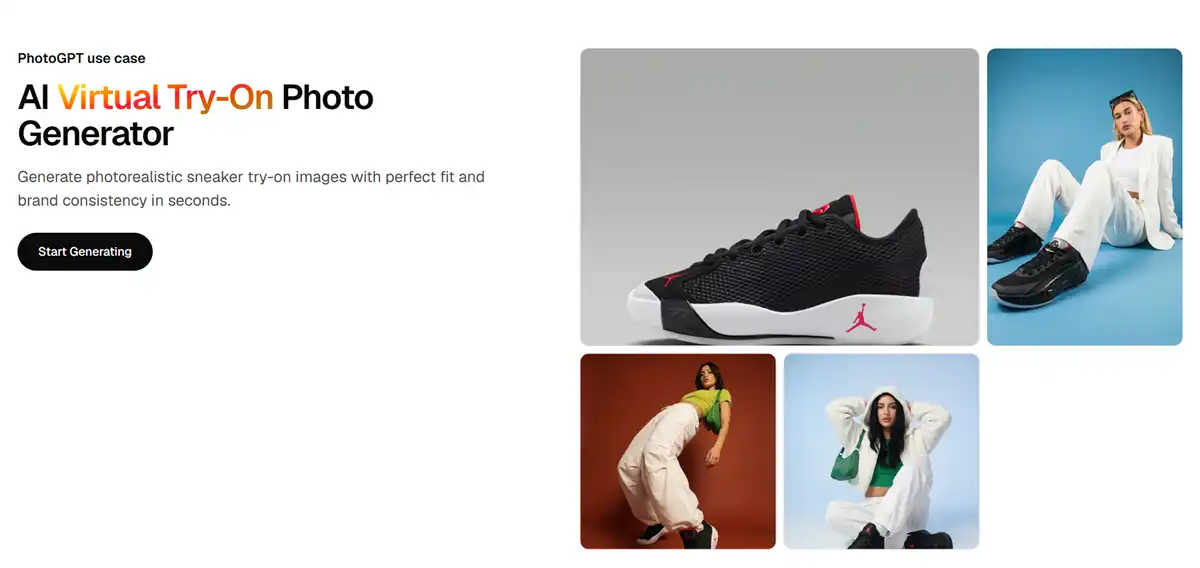
Key features:
Purpose-built for intimate apparel with specialized fabric rendering.
Studio-accurate texture handling for silk, lace, satin, and sheer materials.
Diverse AI model library across body types.
Advanced prompt editing for editorial lighting and professional styling.
Pricing Model: Free tier available; paid plans for more credits and commercial features.
Best for: Social-first brands that need diverse model representations and consistent faces across their entire catalog and social media feeds.
Limitations: No Shopify integration. Less versatile outside intimate apparel. Fewer workflow automation features compared to full-platform solutions.
3. Botika — Best for Photorealistic Model Diversity
Botika uses diffusion-based AI models to generate highly realistic on-model images, with strong results across intimate apparel categories. It brings immense value to the table for brands that have massive inventories of flat-lays or ghost mannequin images that need to be converted into on-model imagery at scale. The platform's primary strength lies in its speed and efficiency, allowing e-commerce managers to generate diverse AI models wearing their garments in a few minutes.
By offering a broad portfolio of digital models, Botika helps brands represent various ages, ethnicities, and body types without the logistical nightmare of casting dozens of physical models. This cuts down on licensing fees and studio costs. However, it is important to note that Botika is fundamentally a product-to-model platform for brands, rather than an interactive virtual try-on widget designed for end consumers to use on your storefront. It is built strictly to optimize backend catalog operations.
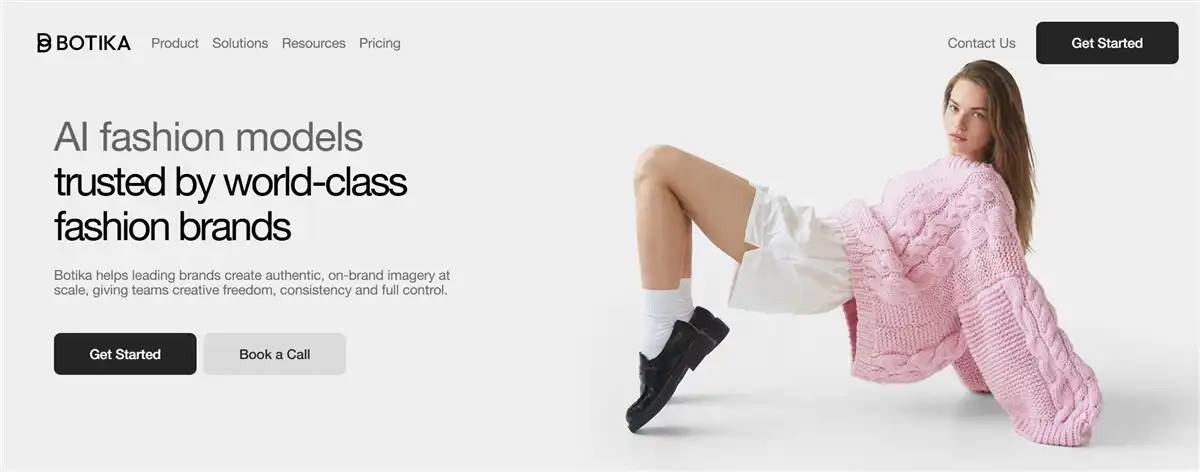
Key features:
Diffusion-based generation for high-fidelity garment rendering.
Rapid conversion of ghost mannequin and flat-lay shots into on-model photography.
Batch processing capabilities for large apparel catalogs.
Extensive diversity in AI models to represent all customer demographics.
Suitable for intimate apparel with realistic body rendering.
API access for custom integrations.
Pricing Model: Multiple Subscription plans, depending on your business needs. Enterprise customers can contact sales for the final price.
Best for: Large e-commerce retailers and B2B brands looking to standardize massive product catalogs quickly.
Limitations: Custom pricing means no transparent entry point for small sellers. Lacks extensive creative control over specific poses and advanced video generation features.
You may also like: Best Botika AI alternatives 2026
4. Fashion Diffusion — Best for Creative Control
Fashion Diffusion is a powerful AI tool built to capture the natural fit, accurate fabric texture, and true-to-life styling of garments. For sellers offering delicate intimate apparel, capturing the exact texture of silk, lace, or ribbed cotton is essential for customer trust, and Fashion Diffusion handles these intricate details exceptionally well. It is designed to be highly intuitive without technical skills or advanced prompt engineering to generate stunning results. This makes it a fantastic option for independent designers, small studios, and cross-border D2C brands who need to localize their campaigns fast.
By generating on-model images featuring different skin tones and body types from a single clothing photo, Fashion Diffusion empowers underwear brands to tailor their visuals for specific international markets effortlessly. The tool's smart masking technology is particularly praised for maintaining the integrity of the garment's original design during the generation process.
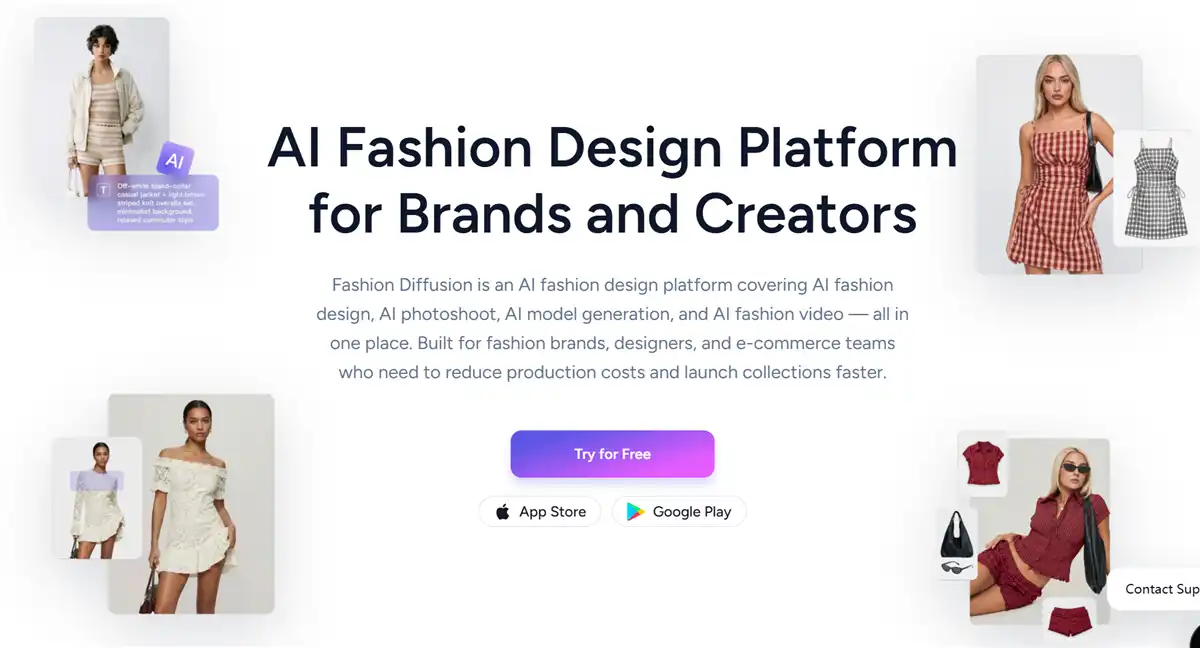
Key features:
Smart masking technology for accurate fabric texture and contour preservation.
Extensive model library for diverse global market localization.
One-click generation from flat-lays to on-model visuals without complex prompts.
Custom and made-to-order visualization capabilities.
Pricing Model: Free trial with sign-up credits; paid plans vary by image quantity.
Best for: Independent designers, bespoke apparel brands, and cross-border D2C sellers needing fast, high-quality localization.
Limitations: Not specifically optimized for underwear — requires more manual adjustment for delicate fabrics. Focused heavily on static photography, lacking advanced video generation tools. Credit costs add up for high-volume sellers.
5. Vue AI — Best Enterprise Fashion AI Platform
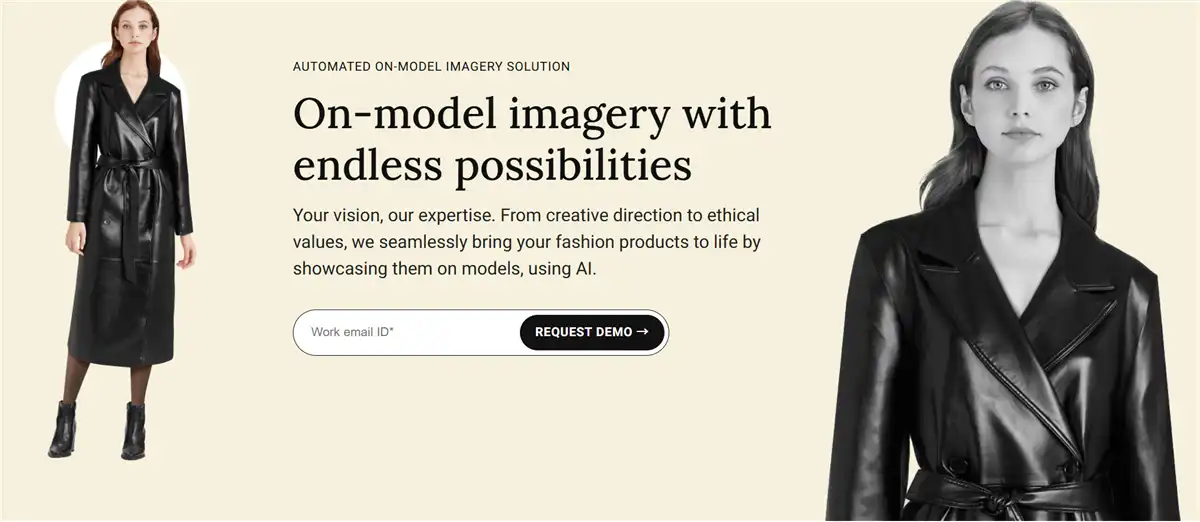
Vue AI takes a highly sophisticated, enterprise-level approach to apparel digitization, offering automated on-model imagery that operates at lower cost and faster than traditional photoshoots. It offers comprehensive solutions that include virtual try-on capabilities optimized for intimate apparel brands that prioritize brand ethics and inclusivity.
Vue AI is available to showcase underwear on a vast array of diverse models from a single input image. It accepts various input formats, including mannequins, ghost mannequins, and 3D renders, making it highly flexible for different supply chains. Additionally, Vue AI offers robust mix-and-match outfit curation, allowing brands to style complex lingerie sets effortlessly. The platform provides a comprehensive dashboard that gives e-commerce teams deep insights into their visual production pipeline.
Key features:
End-to-end automated on-model imagery with flexible input options.
Strong focus on DEI compliance and ethical AI data usage.
Advanced mix-and-match capabilities for outfit curation and styling.
Comprehensive backend dashboard for visual asset management.
API integration for e-commerce platforms.
Pricing Model: Custom enterprise pricing — contact sales for a quote.
Best for: Mid-to-large enterprise retailers, global fashion brands, and companies with strict ethical and DEI compliance standards.
Limitations: Setup and integration require technical resources. Not ideal for small bootstrap sellers due to its enterprise-level focus and custom pricing structure.
6. TinTin — Best for Flat-Lay to Model Conversion
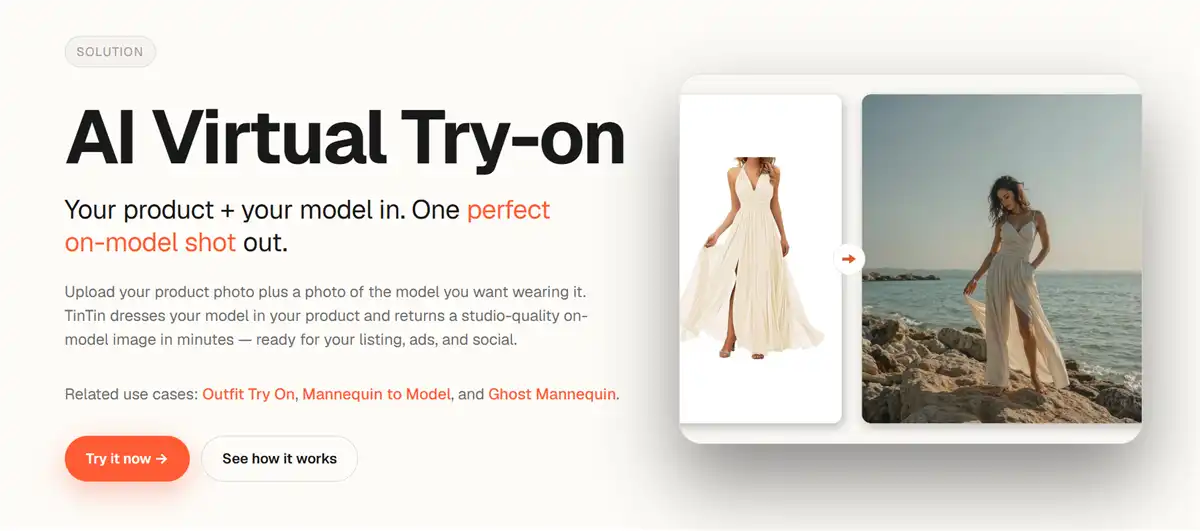
TinTin's AI Virtual Try-on is designed for underwear and lingerie sellers who need high-quality, on-model images one product at a time. Instead of organizing full photoshoots for every new style, you can upload a single clear photo of your underwear, then add a photo of the model you want wearing it, plus an optional background. In minutes, it returns a high-resolution, watermark-free image with natural fit, drape, and true-to-life lighting, ready for your product page, ads, or social posts. The engine is garment-aware: it preserves prints, seams, and fabric behavior, and it only dresses the model in the product you uploaded, without inventing matching bottoms or extra pieces.
For intimate apparel, TinTin includes a dedicated model path tuned for swimwear, bikinis, lingerie, and underwear, so delicate fabrics and coverage render cleanly and accurately. This makes it one of the best underwear AI virtual try-on tools for new drops, hero SKUs, or testing a design before scaling to bulk.
Key features:
Bulk processing via spreadsheet or ZIP file uploads.
Built-in QA workflow for side-by-side review and one-click regeneration.
Consistent model and pose selection for unified catalog aesthetics.
Optimized specifically for listing-ready e-commerce visuals.
Pricing Model: Free tier with 5 credits. Subscription plans unlock more credits and advanced features.
Best for: High-volume apparel sellers, wholesalers, and e-commerce managers dealing with massive SKU counts.
Limitations: Narrower feature set — no video, no Shopify integration, no listing page generation. Quality depends heavily on input photo quality. Limited model customization compared to full-platform tools.
7. WearView — Best for Lingerie and Swimwear Photography
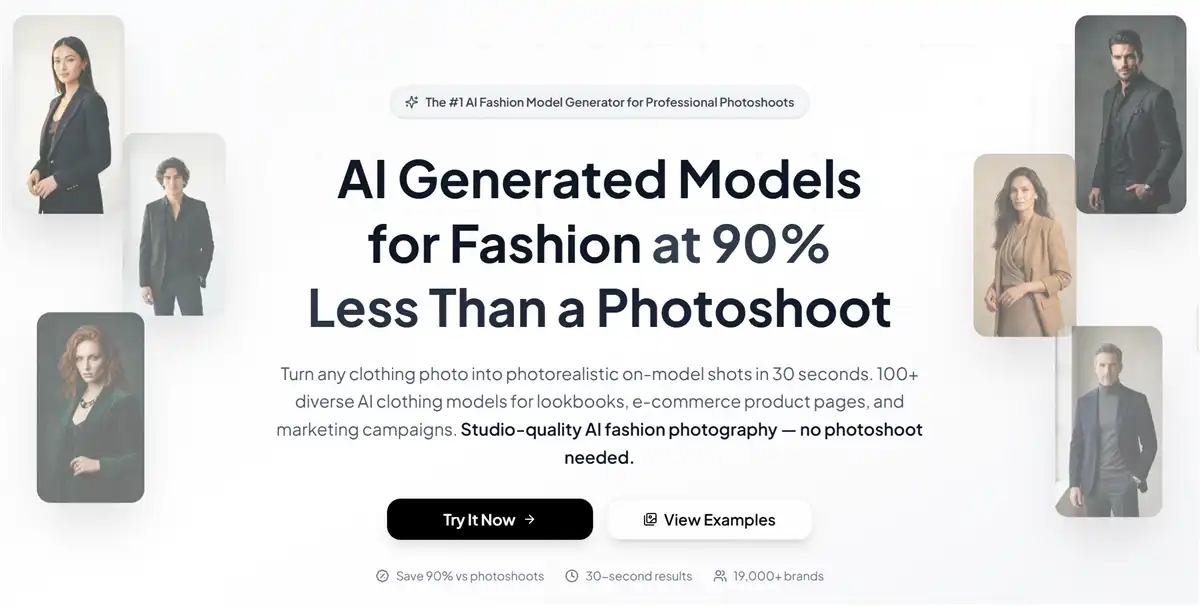
WearView is a top-rated AI photography platform that gives fashion brands complete creative control over how their garments are presented online. What makes WearView one of the best tools for underwear AI virtual try-on is its ability to deliver stunning 4K studio-grade output quality. For intimate apparel sellers, WearView can help generate on-model photos highlighting fine details like embroidery, mesh, and seams in a few seconds.
A major advantage of WearView is its advanced pose control via reference images. Sellers can dictate exactly how the AI model should pose to best show off a specific cut of underwear or a complex lingerie strap design. It also supports consistent model identity and offers a native Shopify app for direct store integration.
Key features:
4K studio-grade output quality for highly detailed garment presentation.
Advanced pose control using reference images.
Faster generation speed than most of the competitors.
AI model swap with over 2,000 poses and diverse ethnicities.
Pricing Model: Multiple subscription plans, according to your business needs.
Best for: Brands seeking high-resolution, studio-quality imagery with meticulous control over model posing and environments.
Limitations: No free tier — the entry cost is higher than most alternatives. Limited beyond photography (no video generation). Credit limits may be restrictive for high-volume catalogs.
8. Kaze AI — Best Free Option for Quick Try-On Visuals
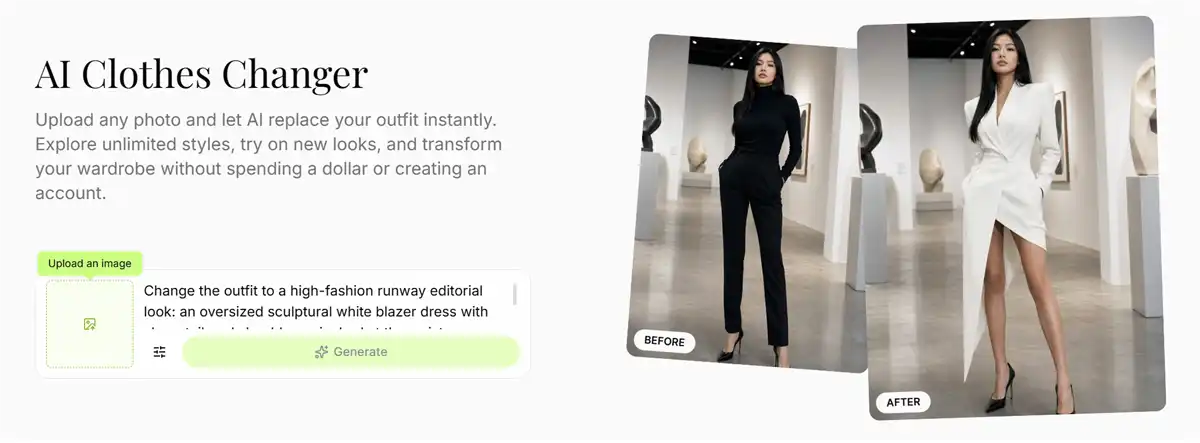
Kaze AI offers a surprisingly capable, free virtual lingerie try-on tool that requires no sign-up. It transforms outfit photos into photorealistic AI lingerie images in seconds, preserving fabric texture, fit, and natural drape. The platform also maintains visual consistency across generated images — model facial features, body proportions, and skin tone stay consistent.
The platform features an AI "try-on" capability that allows users to swap outfits on an uploaded photo, delivering photorealistic results. This makes it an excellent tool for conceptualizing how a specific underwear design might look in an editorial photoshoot before committing resources to produce it. While it may lack the strict, bulk-processing e-commerce workflows, Kaze AI is highly valued by art directors and fashion marketers who need to rapidly iterate on look, styling, and composition to build compelling brand narratives.
Key features:
Strong focus on creative ideation and rapid visual iteration via text prompts.
Outfit-swapping capabilities for conceptual virtual try-on.
Capable of handling specific lingerie and intimate-themed photography prompts.
Includes expert-level image editing tools like background removal and enhancement.
Pricing Model: Free tier with basic features; paid plans for more credits, advanced features, and premium account management.
Best for: Sellers who want to test AI try-on without commitment, or who need quick, low-cost visuals for social media and advertising.
Limitations: No e-commerce platform integration. May require more manual prompting and tweaking to get exact, listing-ready e-commerce results. Lacks the advanced customization and workflow features of paid platforms.
How to Choose the Right AI Virtual Try-On Tool for Your Underwear Business
Selecting the best tool for underwear AI virtual try-on depends entirely on your specific business model, catalog size, and marketing goals. Here's how to narrow it down based on your specific situation:
If your primary goal is to completely streamline your Shopify operations— turning existing product photos into diverse model shots, generating video clips, and publishing them directly back to your store without dealing with AI content blockers—Koozee is the ultimate all-in-one solution.
If pure image quality for lingerie is your only priority, PhotoGPT delivers the most convincing fabric rendering we've seen for delicate materials.
If you're on a tight budget and just getting started, start with Kaze AI's free tier to test the concept, then graduate to a paid tool as your volume grows.
If you run a mid-to-large fashion operation with existing tech infrastructure, Vue AI's enterprise platform and API will integrate into your stack more cleanly than standalone tools.
If your current product photography is all flat-lay, TinTin's flat-to-model pipeline is the most natural fit for your existing workflow.
💡 Pro tip: Most of these tools offer free trials or free credits. Test 2–3 options with your actual product images — the same underwear style can produce very different results across platforms, and only real testing will tell you which one handles your specific products best.
Conclusion
Scaling an intimate apparel brand requires high-quality, diverse, and conversion-optimized visuals, which traditional photoshoots can be limited to do. By integrating the best underwear AI virtual try-on tools into your workflow, you can drastically cut costs, speed up your time-to-market, and present your products on a wide variety of realistic models. Whether you choose the Shopify-connected efficiency of Koozee, the bulk processing power of TinTin, or the creative flexibility of Kaze AI, these platforms provide the technology necessary to elevate your brand. Stop letting the high costs of photography hold back your product launches; leverage AI virtual try-on to create the stunning, listing-ready underwear visuals your customers expect.
FAQ: Best Underwear AI Virtual Try-On Tools
What is AI virtual try-on for underwear?
AI virtual try-on for underwear uses artificial intelligence to generate photorealistic images showing how underwear products look on a human model. You upload product photos, and the AI renders the garment onto a virtual model, preserving fabric details, fit, and drape.
Can AI virtual try-on tools handle delicate fabrics like lace and mesh?
Yes — but not all tools handle them equally well. The best underwear AI try-on tools like Koozee, PhotoGPT, and TinTin are specifically designed to preserve intricate fabric details, including lace patterns, mesh transparency, silk sheen, and sheer panel effects. General-purpose clothing try-on tools often struggle with these fabrics, so choose a tool that explicitly supports intimate apparel.
Do I need technical skills to use these tools?
Most tools on this list are designed for non-technical users. You can just sign up and upload your product photos to generate on-model images for underwear sales. Some enterprise solutions like Vue AI typically need development resources for integration.
Are AI-generated try-on images legal to use for e-commerce?
Yes, as long as the tool grants commercial usage rights. Every tool on this list provides commercial usage terms in its paid plans. Always verify that your plan includes commercial rights before publishing AI-generated visuals to your store.
Will AI virtual try-on visuals reduce my return rate?
It depends. Many retailers report return reductions of 25–40% after implementing AI try-on visuals, because customers make more informed purchase decisions when they can see realistic on-model images showing fit and fabric drape. However, results vary by product category and image quality — AI try-on is a tool to improve the buying experience, not a guarantee of low returns.
How does AI virtual try-on compare to traditional photoshoots for underwear?
Traditional lingerie photoshoots typically cost a lot per session (model fees, photographer, studio, editing) and take 1–3 weeks from booking to final assets. AI try-on tools generate on-model visuals in minutes from existing product photos at a fraction of the cost. AI visuals still benefit from human review for quality control, and very complex garments may need manual retouching.
Can I use these tools if I sell on platforms other than Shopify?
Absolutely. While some of them offer native Shopify integration, all tools on this list produce downloadable images that can be uploaded to Amazon, eBay, Etsy, TikTok Shop, or any marketplace that accepts product photos.
You May Be Interested

8 Best Virtual Try-On Apps for Cosplay Costumes (2026)

Why Is Fashion E-Commerce Return Rate So High? Causes & Fixes

How to Change Model Face in Product Photos: 4 Methods for Apparel Sellers
